Pipettes
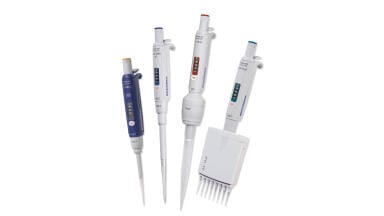
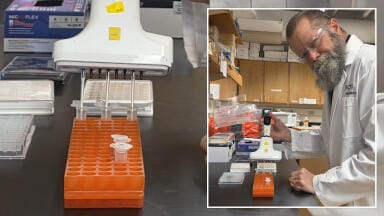
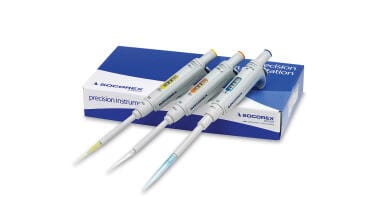
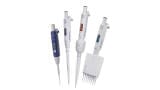
Multichannel pipettes are widely used in biology, genetics, immunology, and diagnostic laboratories to dispense multiple samples simultaneously into microplates. In applications requiring precise volumes across many samples – such as ELISA immunoassays, PCR/qPCR testing, and enzymatic or cellular assays – reproducibility is essential.
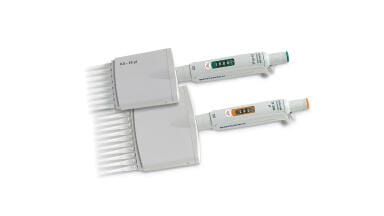
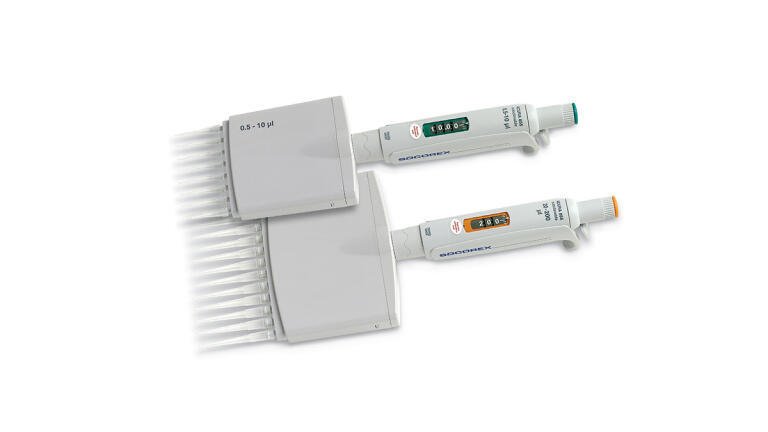
The main advantage of 8- and 12-channel pipettes is their ability to dispense identical volumes into multiple wells in a single step. They can, for example, add reagents to an entire row of wells or fill a microplate much faster than a single-channel pipette. This not only saves valuable time but also improves consistency. To achieve reliable results, however, laboratories need dependable instruments – an area where the Acura® manual multichannel pipette range stands out.
One of its key strengths is flexibility. The intuitive ergonomic design enables comfortable operation during extended use, reducing fatigue in repetitive workflows. A standout feature is the adjustable tip ejector, which ensures compatibility with most pipette tips available on the market. When paired with Qualitix® pipette tips, the instrument offers exceptional performance.
Safety and control are integral to the design. The volume setting mechanism remains securely locked during use, preventing accidental adjustments that could compromise results. A large, easy-to-read display allows users to verify settings at any time. To simplify sterilization procedures, the micropipette can be autoclaved fully assembled.
Manufactured in Switzerland, Acura® manual pipettes are produced under tightly controlled processes to ensure consistent, reliable performance. Their straightforward operation allows both experienced and less experienced users to achieve accurate measurements with confidence.
Choosing Socorex Acura® manual instruments saves time when handling large numbers of samples, reduces human error and hand fatigue, and improves reproducibility to ensure reliable results every time.
Further information at online.
ILM 51.6 Sept 2026





 Product directory