
Laboratory products
Published over 13 years ago. See the latest and most current information on Laboratory products.
AB Sciex have announced the release of a new testing method for laboratories to screen for and quantify dicyandiamide, known as DCD, in dairy products and other protein-rich foods.
The new method from AB Sciex to test for DCD is designed to increase the accuracy and reduce the amount of time to identify dicyandiamide and other nitrogen-rich compounds from hours to just minutes, with limits of quantitation down to low µg/kg. AB Sciex's new method is an efficient and highly sensitive method available for virtually any laboratory to use.
This new method is based on LC/MS/MS (liquid chromatography/tandem mass spectrometry), an analytical technique that has become the industry standard for improving food safety analysis. To achieve high levels of sensitivity and selectivity for the most accurate results, AB Sciex scientists used an Eksigent ekspertTM ultraLC 100 System, a Phenomenex HPLC column and AB Sciex QTRAP® 5500 technology, applying a simple extraction-dilution approach that minimises sample preparation and saves time and money.
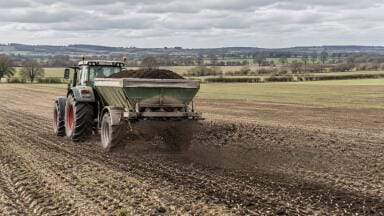
This method is relevant in light of the recent news reports that trace amounts of DCD, a fertiliser residue, were found in dairy products produced in New Zealand. Responsible actions were taken across the industry last month to avert a contamination crisis. As investigations continue, no evidence has been reported about deliberate adulteration of dairy products; however, food safety authorities are boosting surveillance of this contaminant to prevent recurrence of any incidents and alleviate the public's concerns.
Preventative measures to enact further testing as a safety precaution are part of standard policies and procedures for forward-thinking laboratory personnel. AB Sciex's new method for DCD detection can be added to any food laboratory's method library to accelerate a rapid response.
DCD is reportedly used by farmers to reduce the negative effects of greenhouse gas emission and nitrate leaching that can affect waterways. It has also been reportedly used by some to promote the growth of pastures where cows graze. Standards for the acceptance of DCD in food vary by country. While only small trace amounts of DCD were detected in milk in the widely reported case out of New Zealand recently, high doses of DCD are considered toxic for humans.
ILM 51.6 Sept 2026



 Product directory




















.jpg)
