Laboratory products
Published over 10 years ago. See the latest and most current information on Laboratory products.
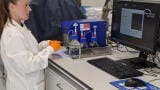
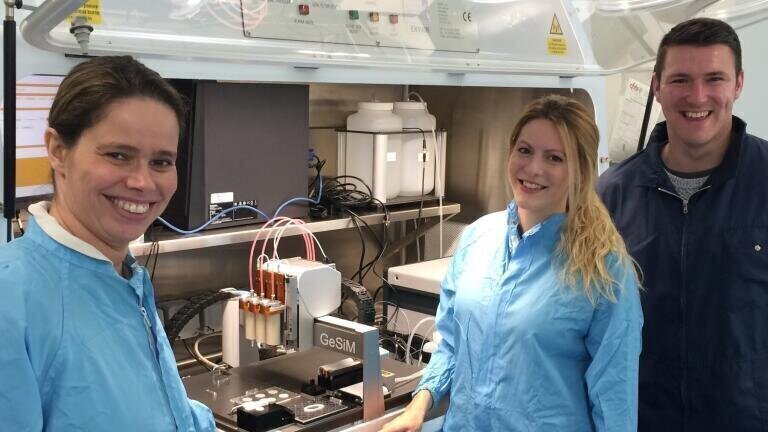
Analytik report on the research program running at the University of Brighton by the Brighton Centre for Regenerative Medicine where a GeSiM BioScaffolder system is being used to develop bionic histological lattices for a variety of tissues for regenerative medicine applications.
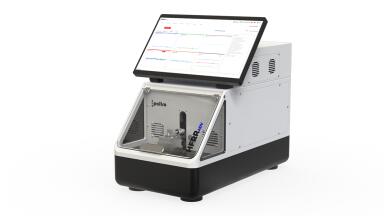
The Centre has invested in a novel printing solution, the BioScaffolder 3.1™ from GeSiM. This is being used to develop bionic histological lattices for a variety of tissues for the physiologically-reflective testing of cells and for the clinically-reflective in vitro testing of drugs/ biomaterials/ bioactive compounds. Professor Matteo Santin, leader of the BCRM, says he has been impressed with the ability of the BioScaffolder system to “plot with cells in a precise and reproducible manner.”
Dr Mark Best is a research fellow at the BCRM. He is part of the team building biological interfaces. Speaking about the project, Dr Best said: “I am excited with the ability to be able to integrate cells into scaffolds. The novelty of it interests me. It is great being at the forefront of such cutting edge technology. I can see a great future in the technique and to producing several publications using it in the field of biomaterials.”
Dr Derek Covill is a BCRM member contributing to the activities of the Centre as a 3D printing specialist. He said: “With the BioScaffolder, we have the ability to control both pressure and temperature of the materials. Looking ahead, we will be developing methods, testing materials and characterising the work to develop repeatable results as needed. In our work so far, we have been working with a range of biomaterials particularly focusing on the printing of the different anatomical compartments of the intervertebral disc and developing interdisciplinary skills in PhD students by merging sophisticated algorithms in medical imaging with 3D printing.”
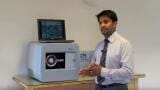
As Product Specialist, Hiran Vegad said: “The GeSiM BioScaffolder 3.1 provides a modular instrument platform with up to four independent z-axes for running several dispensing tools. It can print a variety of pasty materials with up to three cartridges and has a unique optional heat controlled piezoelectric micro-pipetting system for pico- and nano-litre spotting of cells, proteins and curing/hardening substances on certain coordinates within a scaffold structure. The work of the BrightSTAR team provides an ideal home for this technology and I am looking forward to seeing how their research develops in the coming months.”
ILM 51.6 Sept 2026




 Product directory