Laboratory products
Published over 5 years ago. See the latest and most current information on Laboratory products.
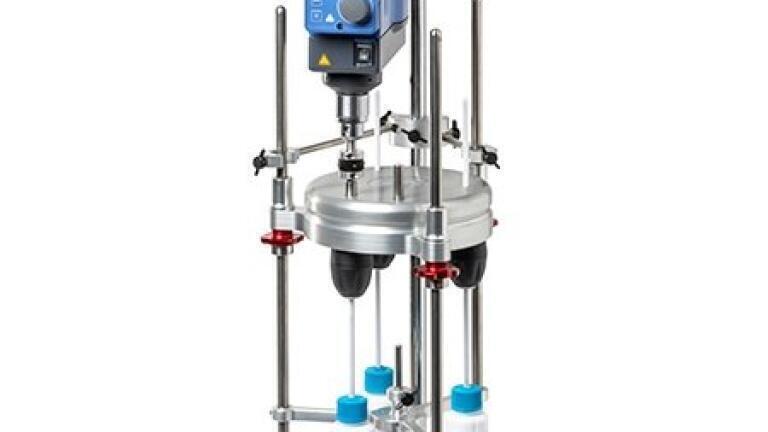
Asynt has supplied Polymer Mimetics with a range of synthetic chemistry equipment to exploit novel chemistries to produce a new generation of high-performance polymers.
Polymer Mimetics is a joint venture between the University of Liverpool, and Scott Bader Company Ltd building upon a new polymerisation process developed by Professor Steve Rannard from the University’s Department of Chemistry. The technology takes widely available chemical building blocks and, in a highly scalable process, transforms them into superior performance polymeric products with the potential to engineer in degradability.
Dr Paul Findlay, Chief Technology Offer at Polymer Mimetics, said: "Since the 1950's less than 10% of the billions of tons of plastic produced worldwide has been recycled - the rest has been sent to landfill or left in the natural environment. Using our new polymerisation technology, we can produce novel polymers to address some of the issues associated with non-degradable materials currently utilised in the personal care, coatings, composites and specialty adhesives markets.”
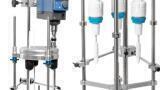
He added: "In setting up a laboratory a key factor influencing our choice of supplier was being able to effectively and safely conduct multiple reactions, on one stirrer hotplate, at the same time enhancing the number of candidate polymers that can be synthesised, tested and ultimately improving the development of degradable polymer products. As some of our polymerisation reactions involve viscous solutions, Asynt’s DrySyn Vortex overhead stirrer platform enabled us to efficiently agitate and heat multiple viscous reactions in parallel, under inert atmospheres. We have also appreciated how the efficient heat conductivity of DrySyn heating blocks has aided the efficient preparation of new polymers. From a sustainability and lab safety perspective, using the CondenSyn air condensers for reflux reactions has eliminated high water usage and potential lab flooding issues that come with using standard water condensers."
ILM 51.6 Sept 2026



 Product directory


.jpg)
.jpg)










.jpg)
.jpg)
.jpg)