Laboratory products
Published over 10 years ago. See the latest and most current information on Laboratory products.
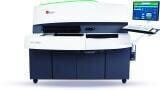
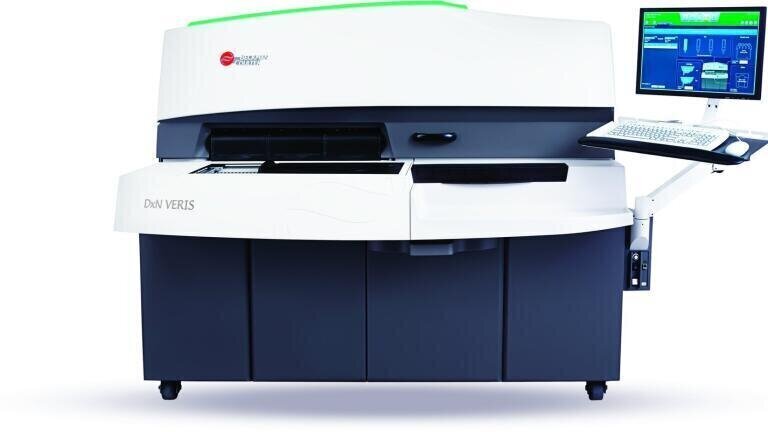
Beckman Coulter Diagnostics have announced the availability of an independent case study, undertaken in Spain, that demonstrates that the company’s DxN VERIS Molecular Diagnostics System has the potential to improve productivity and turnaround times.
The study, conducted by Nexus Global Solutions was undertaken with the assistance of Professor Jordi Vila, Head of Department of Clinical Microbiology, Hospital Clinic, School of Medicine, University of Barcelona, Spain. Serving a local population of 540,000, in addition to being a National and International Centre of reference, the hospital provides the full range of medical and surgical specialties.
The Virology Department is experiencing a growing workload, particularly in Hepatitis C Virus (HCV) viral load requests that relate to new treatment regimens, Cytomegalovirus (CMV) viral load requests for organ transplant recipient patients, and also increased demand for viral load monitoring for Human Immunodeficiency Virus type 1 (HIV-1) and Hepatitis B Virus (HBV).
The study compared workflows and time-to-results between the existing current viral load methods and the new, fully automated Beckman Coulter DxN VERIS Molecular Diagnostics System. The study enabled the laboratory to confirm if alternative automation could deliver workflow improvements to reduce turnaround times, while maximising staff deployment. It also aimed to identify the potential to reduce wasted time and reagents, and how to make the best use of the limited space available.
Study results were positive. It was found that the DxN VERIS workflow involved far fewer steps, particularly during the pre-analytical stage. It also highlighted reduced hands-on time and that the system needed fewer consumables. The time to the first result was also greatly reduced compared to current existing methods.
“The implementation of automated methodologies, such as the DxN VERIS, has the potential to improve the quality and delivery of virology services and, for patients, it allows infectious disease results to be obtained at the earliest opportunity with high sensitivity and specificity,” said Professor Vila. “In addition to this, consolidation of extraction, amplification and detection onto a single platform is considered an important factor for laboratories, like ours, where space is very limited.”
To obtain a copy of the case study, or for further information about the DxN VERIS Molecular Diagnostics System and the DxN VERIS assays currently available, please visit www.beckmancoulter.com/moleculardiagnostics.
ILM 51.6 Sept 2026




 Product directory