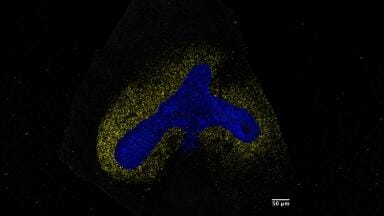
Beckman Coulter introduces IOTest® CD136 (RON)-PE conjugated monoclonal antibody for the identification of a receptor protein kinase potentially involved in tumour development and growth. The CD136 antigen is the product of the recepteur d'origine nantais (RON) gene. It is mainly expressed on cells of epithelial origin. The RON receptor belongs to a group of kinases that play important regulatory roles in normal tissue and can also be involved in cellular disorganization and alteration when overexpressed or mutated.
The new CD136 (RON) antibody from Beckman Coulter will be valuable in a range of basic and clinical research, and has been used in a number of recent and current cancer studies. It will also be useful in pharmaceutical research on therapies designed to block the tumorigenic process. The preformulated, standardized IOTest CD136 (RON)-PE monoclonal antibody is provided in 100-test vials and is the only directly conjugated monoclonal antibody on the market. It can be used to assess RON expression on both normal and abnormal epithelial cells, recognizing proRON and RON, and the three known RON variants. CD136 (RON)-PE is approved for research use only.






 Product directory