Laboratory products
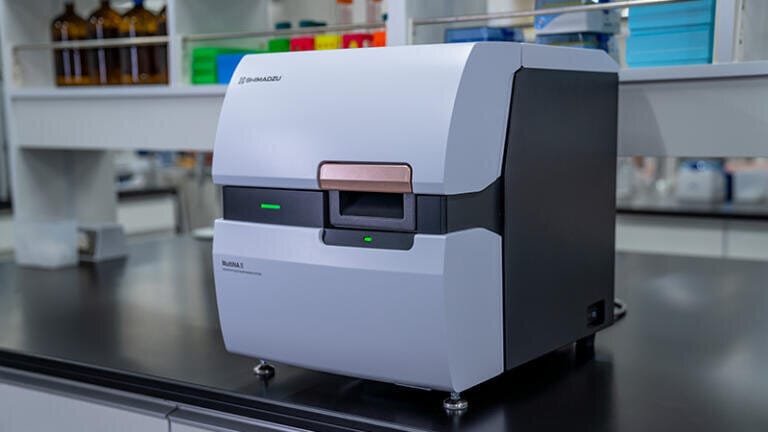
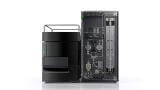
Shimadzu has recently released the MultiNA II MCE-301 microchip electrophoresis system. By automating the entire process of electrophoresis, which usually takes more than two hours by hand, the company significantly improves the efficiency of genetic analysis operations.
MultiNA II MCE-301 realises the calculation of indicators about the deterioration state of RNA and high sensitivity detection using a dedicated reagent kit. It is equipped with a sample addition and a dilution function of the sample under analysis while following the strength of "high sensitivity and high precision, fully automatic analysis of multi-samples." It is sold to universities, research institutions, contract testing companies, and food manufacturers related to medicine, agriculture, pharmacology, science, and engineering.
With the release, Shimadzu supports the dissemination and innovation of genome editing technology, further contributing to the progress of research in the healthcare and food safety fields, which are among the company’s priority areas.
1. Improved workflow with automation
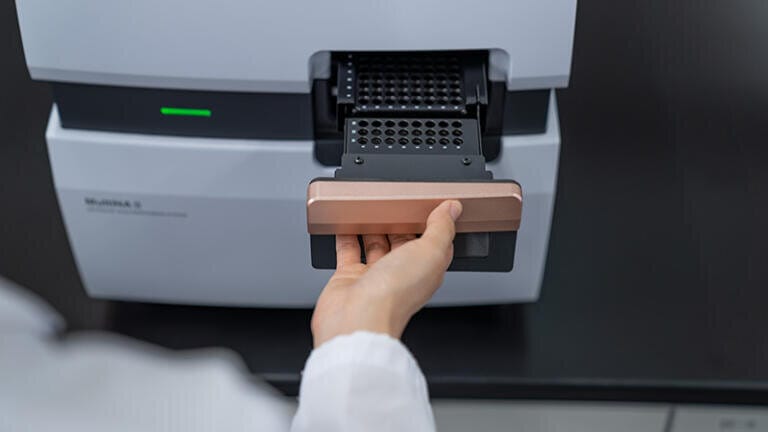
A fully automatic analysis can be initialised by simply registering samples, setting of reagents and samples, and pressing the start button. The time required to start the analysis is only ten minutes. In the previous model (MultiNA I MCE-202, released in 2007), it was not possible to add samples until the analysis of all samples was completed. The new version was improved so that they can be added during the analysis if needed. When analysing a highly concentrated sample, the dilution step, which was previously manual, is performed by adding an automatic dilution function to the device.
2. Advanced analysis and detection capabilities
MultiNA II MCE-301 can calculate the RNA Integrity Index (RII) for the deterioration state of RNA. This makes it possible to quantitatively evaluate the quality of RNA samples. In addition, as a new function for DNA analysis, a "fingerprinting function" was added that automatically determines the presence or absence of target DNA, and a "Grouping analysis function" that classifies samples according to the analysis results. The detection sensitivity to DNA analysis, which was 200pg/μL in conventional models, was increased to 5pg/μL by using a new reagent kit (sold separately).
3. Reduced electricity consumption to 70% and net water consumption to 60%
Power consumption was reduced to seventy percent compared to conventional models. The consumption of pure water is also diminished to the same level, and the environmental impact of waste liquid is lowered. The equipment size has been scaled down to 85% and the height has been reduced to 73% allowing installation on an experimental table.
Read more about MultiNA II MCE-301 here.
ILM 51.6 Sept 2026



 Product directory





















.jpg)
