Laboratory products
Published over 2 years ago. See the latest and most current information on Laboratory products.
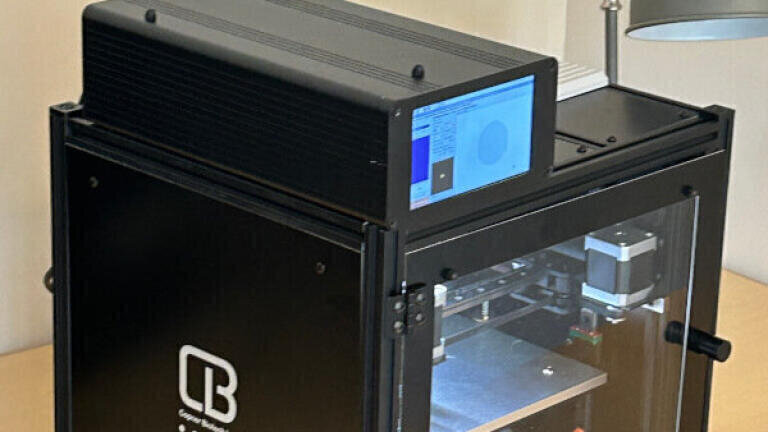
Copner Biotech introduces an innovative approach to biofabrication. Departing from decades-old prototyping methods, Copner Biotech pioneers Graphical Rectangular Actual Positional Encoding (GRAPE UK®), a novel data format and 3D printing technique.
Copner Biotech’s GRAPE M1 modelling software facilitates the design of complex 3D architectures, employing rectangular constructs and outputs these models in both STL and GRAPE data formats. GRAPE data is read directly by their family of extrusion and inkjet bioprinters. Conversely, the STL data produced is handled more effectively by GCode slicing software to improve the performance of third-party bioprinters.
Moreover, Copner Biotech’s GRAPE 3D/4D extrusion bioprinters GRAPE S1; utilise microfluidics employing optimised droplet deposition coupled with raster style printing movement to provide accurate and repeatable biofabrication. Conversely their GRAPE S2 4D inkjet bioprinter an Innovate UK funded project also utilising microfluidics coupled with raster style printing; atomises biomaterial from a fine nozzle. Using this game-changing method of biofabrication, GRAPE M1 software constructs an inverse of the model definition at that layer, which serves as a mould for subsequent printing of the model layer. This enables the 3D printing of low viscosity biomaterials as disclosed in Copner Biotech’s UKIPO granted patent GB2609532.
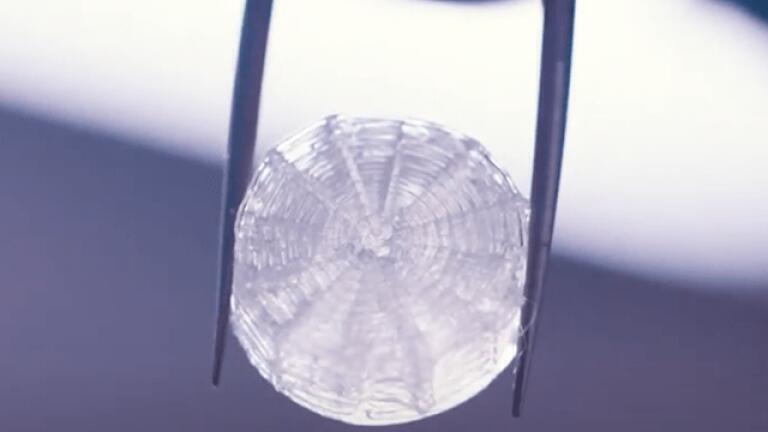
Copner Biotech also manufactures state of the art 3D cell culture scaffolds designed using their GRAPE M1 software; where the STL model data output composed of rectangular constructs provides for reliable model interpretation by GCode slicers and improved print resolution via FDM printers. Validated by Swansea University, these animal free cell culture scaffolds provide discrete oxygen and nutrient gradients across the scaffold interface, maximising cell confluence and subsequent proliferation. These scaffolds as sold across Europe and US have been adopted into the workflows of large pharmaceutical outlets.
More information online
ILM 51.6 Sept 2026




 Product directory






















.jpg)