Laboratory products
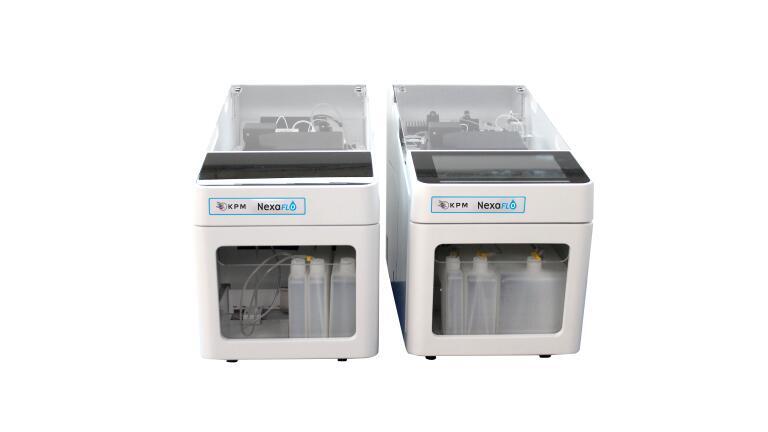
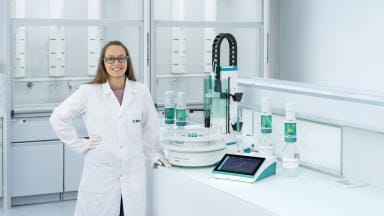
KPM Analytics has expanded the capabilities of its NexaFlo® Continuous Flow Analyzer, introducing improved sensitivity for seawater nutrient measurements.
Understanding nutrient levels in the ocean is central to tracking ecosystem health, supporting climate research, and informing environmental policy. Yet analysing seawater presents a persistent challenge: key nutrients such as nitrate, nitrite, phosphate, silicate, and ammonium often exist at extremely low concentrations, hidden within a chemically complex, ion-rich matrix.
Detecting these trace compounds reliably requires highly stable analytical conditions, precise reagent delivery, and instrumentation capable of maintaining low detection limits without signal drift.
The NexaFlo® system builds on KPM Analytics’ established continuous flow technology, introducing upgraded electronics and refined signal processing to reduce background noise and improve measurement stability. According to the company, the platform delivers up to two- to three-fold improved performance compared with its predecessor, enabling more confident quantification of trace nutrient levels in open-ocean and deep-water samples.
A key advantage lies in continuity: NexaFlo® retains compatibility with existing analytical manifolds developed for earlier systems, allowing laboratories to transition without revalidating established methods. This includes widely used Grasshoff chemistries for nitrate, nitrite, phosphate, and silicate, alongside fluorometric approaches for ultra-low ammonium detection.
To support routine marine workflows, KPM Analytics is also introducing a bundled suite of seawater analysis manifolds covering major nutrient parameters, including nitrogen and phosphorus species. The configuration is designed for oceanographic institutes, regulatory agencies, and commercial testing laboratories handling high-throughput environmental monitoring.
With decades of experience in nutrient analysis, KPM Analytics positions NexaFlo® as an evolution of continuous flow methodology, combining proven chemistry with modern instrumentation designed for today’s environmental challenges.
More information online
ILM 51.6 Sept 2026



 Product directory



















.jpg)
