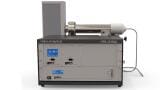
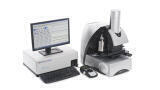
A new addition to the Bohlin Gemini family of rheometers from Malvern Instruments is optimized for the control of ultra-low torques, and opens up new opportunities to probe weak or sensitive material structures and low viscosity systems. The new instrument will make its debut at the 77th Annual Meeting of the Society of Rheology (October 16-20, 2005; Vancouver, BC) for which Malvern is a primary sponsor.
Like all previous Bohlin High Resolution rheometers, the new Bohlin Gemini HR nano offers advanced technology with straightforward operation. While enabling the measurement and control of nano-torque levels, it retains a continuous working torque range to 200 mNm allowing complete rheological characterization. Allied to the most sensitive normal force measurement available, the Gemini HR nano offers the ultimate in instrument capabilities for weakly-structured systems.
Development of this new rheometer has been made possible through the continued advancement of Malvern's state-of-the-art air bearing design coupled with its patented Rotonetic? 2 DSP drive system. The Bohlin Gemini HR nano's unsurpassed range and sensitivity allows torque and speed control across all steady, dynamic and transient test modes. Both strain controlled and stress controlled tests can be performed with ease.



 Product directory