Laboratory products
Published over 13 years ago. See the latest and most current information on Laboratory products.
Experts from Malvern Instruments made oral and poster presentations at SCM-6, the 6th International Symposium on the Separation and Characterization of Natural and Synthetic Macromolecules, which took place in Dresden, Germany, from 6-8 February 2013. Bernd Tartsch, Product Applications Specialist for Separations at Malvern spoke about ‘How molecular weight and branching of polymers influences laser sintering techniques and light scattering techniques’ and a poster written by John Duffy, Product Technical Specialist for Rheometry, discussed ‘Using microrheology to fully characterise the dynamic spectrum and viscoelastic properties of natural and synthetic macromolecules in solution’.
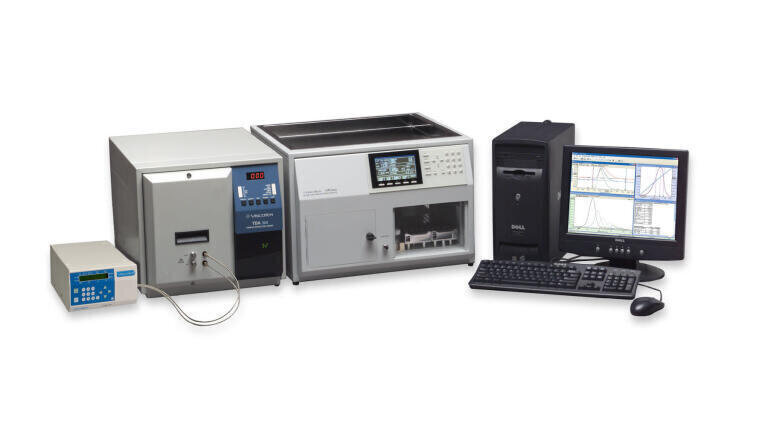
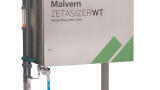
Malvern exhibits were from its range of solutions for the separation and characterisation of large molecules. This range includes Viscotek gel permeation/size exclusion chromatography (GPC/SEC) systems that measure absolute molecular weight, mass, size, concentration and the molecular structure of proteins, polymers and other macromolecules, and Zetasizer instruments which apply dynamic light scattering to measure particle size, zeta potential, protein charge and molecular weight, providing critical information about stability or aggregation. Following the launch of a new Zetasizer instrument last year, which included additions to the software, dynamic light scattering technology can also be used to make microrheology measurements with the Zetasizer Nano ZS and Zetasizer Nano ZSP instruments.
In his lecture, Bernd Tartsch discussed the need to use high quality polymers in the laser sintering processes that are used to build up complex components layer by layer, and in which the re-use and recycling of polymers is crucial for cost-effective operation. Size exclusion chromatography with light scattering and viscosity detection is shown as a versatile tool to determine the molecular weight and degree of branching of the polymers in order to judge if the material can be re-used or not.
Malvern’s poster looked at the application of rapidly evolving microrheological techniques for understanding the rheology and dynamics of macromolecular solutions, examining optical microrheology based on Dynamic Light Scattering (DLS). This study shows how the combined benefits of conventional macrorheology and DLS microrheology techniques significantly extend the accessible frequency range for measuring the viscoelastic spectrum of macromolecular solutions.
ILM 51.6 Sept 2026



 Product directory




















.jpg)
