Laboratory products
Published over 5 years ago. See the latest and most current information on Laboratory products.
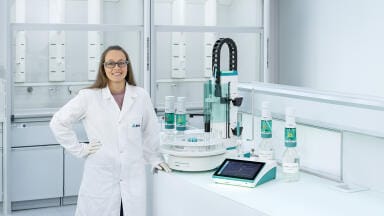
Many laboratories are still using manual titration to perform their routine analysis. However, glass burets are delicate to handle, volumes are difficult to read, and exposure to hazardous liquids pose a threat to the user’s health. A short video describes and explains these and other reasons why laboratories should switch from manual titration to using an automatic system with a digital burette and a potentiometric end point detection.
As titration is one of the oldest methods of chemical analysis, many standards still describe manual titration methods. As such, older standard methods are being modernised for many applications, users should think about switching to automatic titration.
The key reasons described in the video from Metrohm are:the burette is filled and emptied at the touch of a button; modern titration systems provide step by step guidance how to prepare the titration; digital titrators provide more reliable and reproducible endpoint evaluation; the complete analysis is documented according to GxP requirements; the user is protected from direct exposure to hazardous chemicals.
More information online
Lab Asia 33.6 Dec


 Product directory