Laboratory products
Published over 15 years ago. See the latest and most current information on Laboratory products.
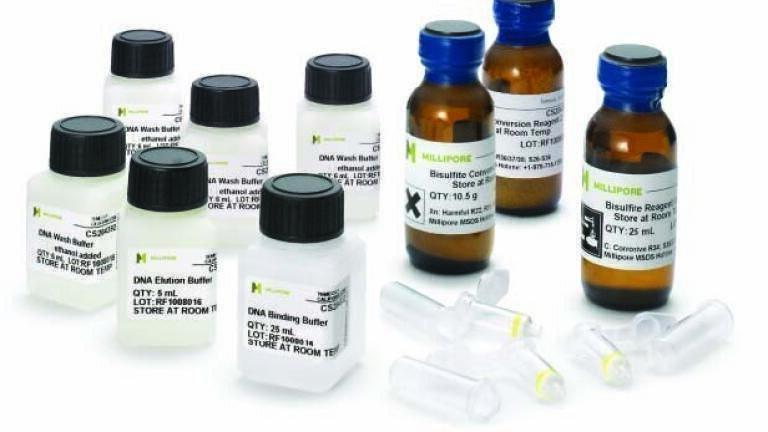
Merck Millipore announced the introduction of a rapid kit for bisulfite conversion, which is a critical first step in mapping the differences in genomic DNA methylation patterns. Aberrant DNA methylation can result in inappropriate activation or silencing of specific genes and is associated with errors in embryonic development as well as the onset of diabetes, cancer, cardiovascular, and other diseases.
The new CpGenome™ Turbo kit reliably converts unmethylated cytosines to uracil in 90 minutes, which is twice as fast as commonly used bisulfite kits and reagents. By increasing the throughput of bisulfite modification, the CpGenome Turbo kit allows researchers to examine DNA from more samples in less time.
The CpGenome Turbo kit features a proprietary conversion reagent that reduces incubation times while retaining high efficiency, converting more than 99.9% of unmethylated cytosines to uracil. The kit is also highly sensitive, requiring as little as 1ng of DNA.
The resulting, modified DNA is pure and ready for epigenetic mapping by sequencing, microarray hybridisation, or quantitative PCR. To facilitate PCR analysis, Merck Millipore offers more than 20 different gene-specific CpG WIZ® kits containing the necessary reagents for PCR amplification of bisulfite reactions.
ILM 51.6 Sept 2026



 Product directory