Laboratory products
Published over 13 years ago. See the latest and most current information on Laboratory products.
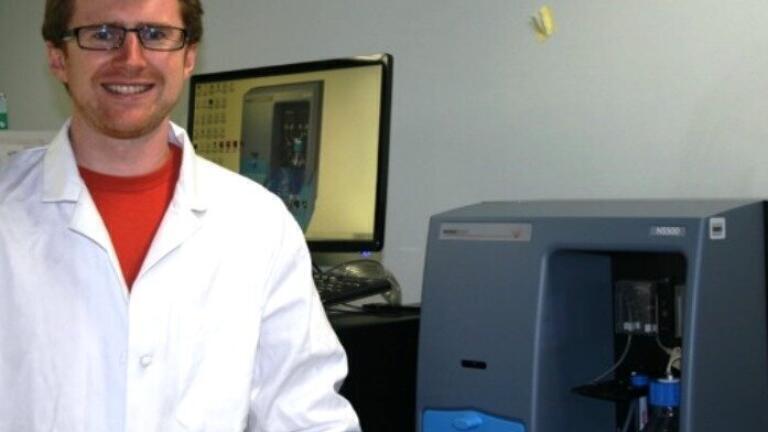
Nanoparticle Tracking Analysis, NTA, is being applied in the Chemical Engineering Department of the California Institute of Technology to study nanoparticle-based therapeutics being developed for the treatment of illnesses such as dementia and Alzheimer's.
The central theme of the Mark E Davis research group at Caltech is the use of chemical engineering concepts (synthetic chemistry and analytical engineering problem solving) to answer important fundamental questions in the physical and life sciences. Current research entails designs for the synthesis of inorganic and hybrid, organic-inorganic materials for catalysis and biocompatible materials for the delivery of macromolecular therapeutics.
Dr Devin Wiley is a recent graduate in the Davis Group. His research focuses on delivering nanoparticle therapies across the blood-brain-barrier using targeted nanoparticles. Pathologies of interest include senior dementia, Parkinson's and Alzheimer's diseases. The strategy is to deliver large-molecule therapeutics tucked inside nanoparticles that have proteins attached to their surface. These proteins will bind specifically to receptors on the blood-brain-barrier, allowing the nanoparticles and their therapeutic cargo to be shuttled across the barrier and released into the brain.
Describing his work, Wiley said "We have two main areas of research in our group. One is developing nanoparticle-based therapeutics for the treatment of cancer. The other is designing therapeutics to be delivered to the brain. So far, we have used the NanoSight Nanoparticle Tracking Analysis system to size the nanoparticles we create and then to measure their zeta potentials.
"We selected NTA as it is a convenient and rapid method to size the nanoparticles we have manufactured. Visual confirmation of the nanoparticles is useful. Prior to NTA, we used DLS and a ZetaPALS system from Brookhaven. We would also use CryoTEM to size the nanoparticles. The positive advantage of NTA is its ability to visualise each nanoparticle and then to obtain size distributions based on individual particle measurements. Sizing by NTA is much faster and much cheaper than CryoTEM imaging."
Wiley's work at Caltech has been also showcased as part of TedxCaltech: The Brain. In a recent presentation, he described this project as a work-around - a way to sneak therapeutics past the barrier and into the brain to potentially treat neurologic diseases.
ILM 51.6 Sept 2026



 Product directory
















.jpg)
