Laboratory products
Published over 13 years ago. See the latest and most current information on Laboratory products.
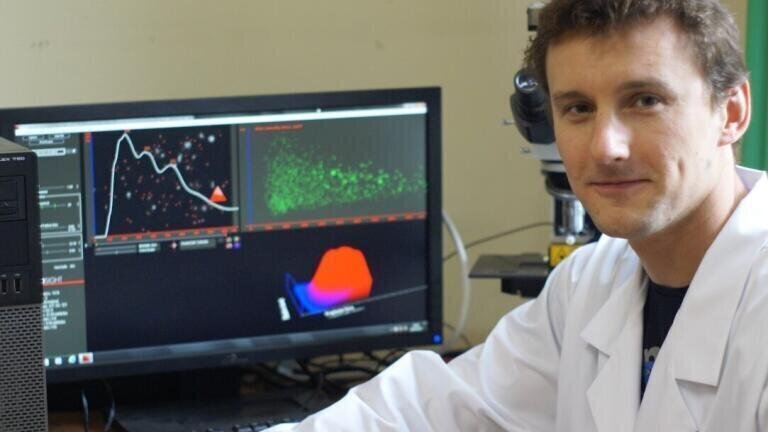
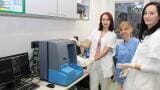
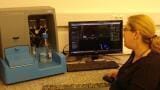
Nanoparticle Tracking Analysis, NTA, is being used in the Faculty of Chemistry of the Jagiellonian University for the characterisation of catalytic materials used in environmental applications such as N2O decomposition and soot oxidation.
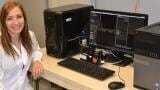
Dr Pawel Stelmachowski is an Assistant Professor in the Materials and Surface Chemistry Group at the Jagiellonian University in Krakow. ‘UJ’, as it is known, is Poland's oldest university having been founded in the mid-fourteenth century. The Group's research goals are the design, development and optimisation of catalytic materials. These are used mainly for environmental applications such as N2O decomposition and soot oxidation. The phase cooperation of crystallites of different sizes and deposition of active phase on monolithic supports requires sizing and characterisation measurements and this is why NTA was chosen.
Describing his practical reasons for choosing NTA, Dr Stelmachowski said: "It's useful to evaluate the particle sizes prior to the TEM analysis which is much more expensive and time consuming and which requires good quality samples. We want to know the size and dispersion of the active phase particles prior to deposition on monolithic substrate. We'll soon be launching a new facility for continuous flow synthesis in supercritical conditions. Here, the synthesis product will be analysed directly from the reactor in suspension. As different experimental conditions will yield products of different sizes, using NTA will be very important to this research."
Continuing to describe his experiences, Dr Stelmachowski said "Before using NTA, I used dynamic light scattering (DLS) but encountered several problems whereas NTA is fast and easy to operate. The most very important feature for me is that NTA works with powders in suspension so the sedimentation and presence of big particles is not an issue here as it was with DLS. Powders with large dispersion of particle sizes are much more easily characterised. The thing with sedimentation is that it is caused by the presence of very large particles, usually from not very well-ground powder. This means the preparation of the sample is less demanding, much easier with NTA."
ILM 51.6 Sept 2026



 Product directory

















.jpg)
