Laboratory products
Published over 10 years ago. See the latest and most current information on Laboratory products.
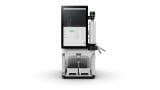
Siemens Healthcare Laboratory Diagnostics business area announced today the launch of the industry’s first automated quantitative thyroid stimulating immunoglobulin (TSI) assay used in the differential diagnosis of Graves’ disease, an autoimmune disorder which affects approximately 32 million people worldwide. The assay is available on the Siemens IMMULITE 2000 and IMMULITE 2000 XPi immunoassay systems.
Unlike TRAb (TSH receptor antibody) assays which detect both stimulating and blocking antibodies, the Siemens TSI assay specifically detects only thyroid stimulating antibodies, which are the hallmark of Graves’ disease. This makes the assay highly specific to aid in the disease’s diagnosis. With a clinical sensitivity and specificity of 98.3% and 99.7% respectively, the new Siemens TSI assay offers laboratories a fast, easy, and specific diagnostic tool for the assessment of Graves’ disease.
“Siemens is very proud to offer the first automated quantitative TSI assay on the market. This innovation eliminates the need for manual preparations and long incubation times,” explained Franz Walt, President, Siemens Healthcare Laboratory Diagnostics business area. “Not only does this automated assay streamline lab operations and enhance efficiency, it also delivers results to clinicians much more quickly enabling faster patient diagnosis and initiation of proper treatment.”
Graves’ disease is the most common form of hyperthyroidism, and is characterized by the presence of TSI, which are found in over 90% of patients. TSI mimic the activity of TSH, leading to an elevated production of thyroid hormone. Left untreated, Graves’ disease can lead to miscarriage, birth defects, thyroid eye disease, and can even be life-threatening. Women carry a 10 -20 fold risk of acquiring Graves’ disease compared to men.
ILM 51.6 Sept 2026




 Product directory