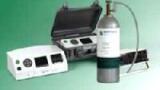
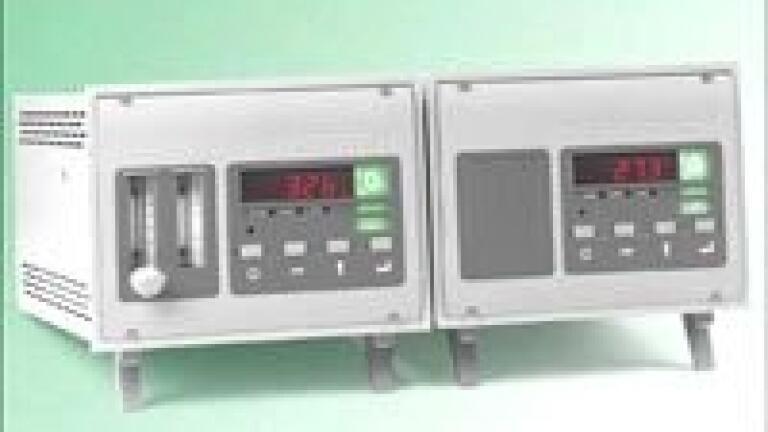
Systech Instruments has launched new versions of its widely used Series 900 oxygen analysers. The main design changes are aimed at making the instruments even more versatile and easy to install and use. As with the earlier versions, the new design is available with a range of electrochemical fuel cell sensors and a choice of bench top, weatherproof (IP66/NEMA 4X) and rack mounting cases, with or without a built-in bypass flowmeter.
The new Series 900 instruments incorporate a number of detailed improvements including password protection for the system set-up and three, user configurable analogue outputs in addition to the RS232/485 data communication interface and high/low and fault alarm outputs. Depending on the sensor selected, the Series 900 can monitor oxygen content of a wide variety of gas streams such as hydrogen, combustibles, hydrocarbons and inert gases, and will measure in the range 0.01 ppm to 30% using a trace level electrochemical sensor and from 0.01 to 100% using the percent sensor which may be used with acid gases such as carbon dioxide.
All Systech Instruments’ sensors are easily calibrated to ambient air. For ISO purposes, certified and traceable calibration gases can be used to meet the most demanding quality assurance programme.


 Product directory