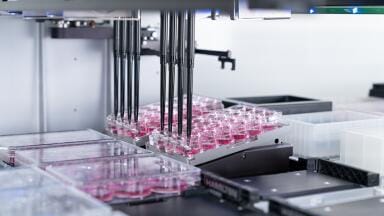
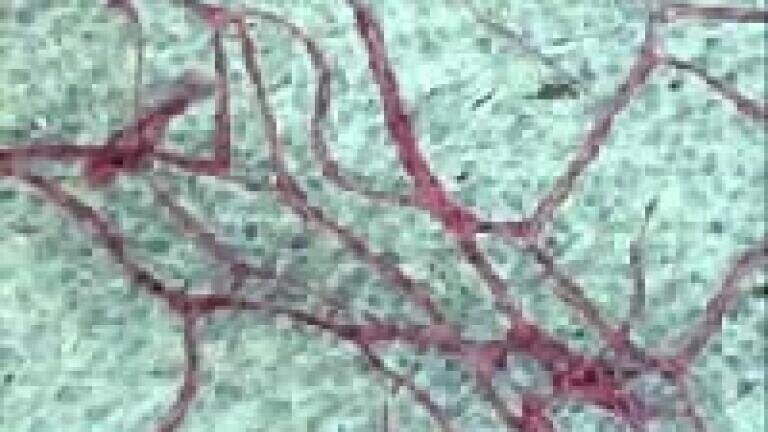
TCS Cellworks has announced the launch of AngioKit® 96, the latest addition to its AngioKit range. As the first microplate-based totally human cell co-culture model of angiogenesis, this range perfectly mimics all stages of the human angiogenic process. The new AngioKit 96 format is specifically designed for high throughput screening (HTS) by offering use of 96 well plates to complement the 24 well format AngioKit already available for high content assays (HCA).
The AngioKit 96 format for HTS requires minimal intervention and full visualization and quantification of all morphological changes throughout the angiogenic process. The all human assay kit can quantify in parallel both positive and negative modulators of angiogenesis and means researchers can stop the use of animal models almost totally.
Directly comparable to the human clinical situation, the kit enables tubules to be readily stained with antibodies and permits easy hypoxic induction experiments. Furthermore, it allows inclusion of additional tumour cells, tumour exudates and normal human cells. Several approaches to analysis of results are available – from the AngioSys™ image analysis software (tubule length, branch points, tubule area etc) to ELISA colorimetric assays.




 Product directory