Laboratory products
Published over 16 years ago. See the latest and most current information on Laboratory products.
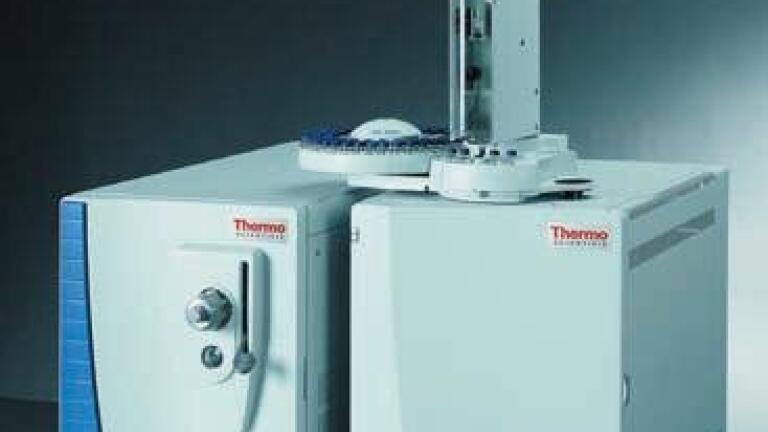
Thermo Fisher Scientific, Inc announced a new method that enables rapid and accurate identification and quantification of pesticides in rice. The QuEChERS (Quick, Easy, Cheap, Effective, Rugged and Safe) extraction method takes advantage of the Thermo Scientific ITQ 700 GC-ion trap mass spectrometer and the Thermo Scientific FOCUS GC gas chromatograph to increase speed and improve sample preparation. The application note describing the method, entitled ‘Multi-residue Pesticide Analysis in Rice by a Modified QuEChERS Extraction and Ion Trap GC/MSn Analysis’.
Recently formulated pesticides are smaller in molecular weight than their predecessors and are designed to break down rapidly in the environment. As a result, more careful consideration must be placed on the sample preparation for extraction and the instrument parameters for analysis in order to successfully identify and quantify these compounds in foods. The QuEChERS sample preparation method, which is already shown to simplify the determination of pesticides in fruits, vegetable, grains and herbs, can now be used to successfully prepare rice extracts before ion trap GC/MSn analysis.
The study was performed by pairing the ITQ 700 with the Thermo Scientific FOCUS GC gas chromatograph to establish the linear ranges, quantitation limits and detection limits for a list of pesticides that are commonly used on rice crops. Samples were prepared in matrix using the QuEChERS sample preparation method, which involves extraction, clean up and solvent exchange processes. The ITQ 700 GC-ion trap MS
demonstrated excellent accuracy at low concentrations of 33 pesticide residues analysed in rice. The optional MSn mode was shown to offer enhanced selectivity over scanning modes such as full scan and selected ion monitoring (SIM). This enables users to identify, confirm and quantify the existence of pesticides in a single analytical run. In addition, the daily analysis of endrin, DDT and their breakdown products confirmed the system’s ability to analyse active compounds without the need for continual, expensive and time-consuming maintenance.
ILM 51.6 Sept 2026



 Product directory