Research news
Review evidence has highlighted the gut microbiota as a central mediator of high-altitude health, with hypoxia, cold and radiation linked to dysbiosis, impaired gut barrier function, systemic inflammation and altered acclimatisation
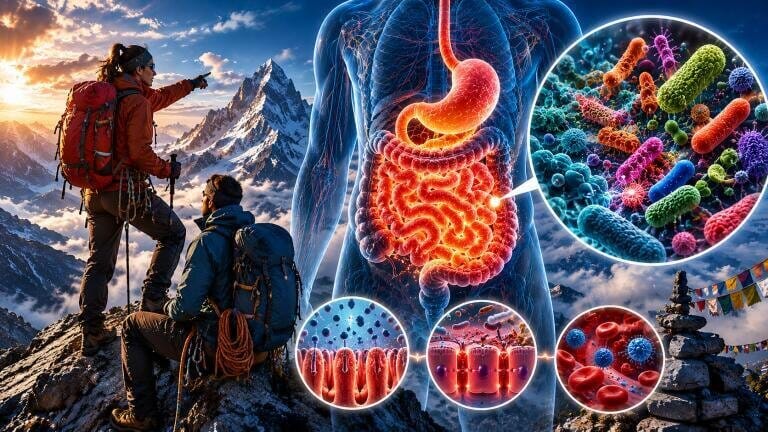
High-altitude environments may remodel the gut microbiota in ways that affect health far beyond the gastrointestinal tract, according to a review of evidence from human and animal studies. The review examined how hypobaric hypoxia, cold exposure and intense radiation could alter the gut microbial ecosystem and contribute to physiological stress, inflammation and disease risk in people who live in – or travel to – regions that are more than 2,500 metres above sea level.
The authors reported that high-altitude exposure has been associated with gut dysbiosis, impaired intestinal barrier function and increased intestinal permeability. These changes may allow bacterial products to move from the gut into the bloodstream, where they can promote systemic inflammation and contribute to poor acclimatisation. The review positioned the gut as a key biological interface between environmental stress and host adaptation, rather than as a passive site affected only by diet or gastrointestinal symptoms.
The gut microbiota comprises a complex community of bacteria, fungi, viruses and archaea. Techniques such as 16S ribosomal RNA sequencing and shotgun metagenomics have shown that high-altitude exposure can reduce microbial diversity and shift the balance of microbial species. Reported changes included a decline in beneficial microbes that produce short-chain fatty acids – such as Faecalibacterium and Roseburia – alongside an expansion of species that are opportunistic and pro-inflammatory.
Hypoxia was described as one of the principal drivers of this microbial disruption. Under normal conditions, colonocytes use butyrate through oxygen-consuming β-oxidation, which helps to maintain a low-oxygen environment in the gut lumen and favours obligate anaerobic bacteria. At high altitude, hypoxic stress can disturb this process, increase luminal oxygen availability and favour aerotolerant bacteria. Cold stress and diet change at altitude may further reshape the microbial community and reduce its capacity to ferment dietary fibre into protective metabolites.
A major consequence of this dysbiosis is damage to the gut barrier, which depends on chemical, physical and immune defences. The review reported that hypoxic stress can impair the production of mucins and antimicrobial peptides by goblet and Paneth cells. At the same time, dysbiosis may weaken tight junctions between epithelial cells, which increases intestinal permeability. This ‘leaky gut’ state can allow lipopolysaccharides and other bacterial products to enter the circulatory system and activate inflammatory pathways, including Toll-like receptor and nuclear factor kappa B signalling.
The authors placed particular emphasis on microbial metabolites. Short-chain fatty acids, including butyrate, help to fuel colonocytes, preserve barrier integrity and support regulatory T-cell differentiation, which promotes immune tolerance. Bile acids, which gut bacteria modify, activate receptors such as farnesoid X receptor and Takeda G protein-coupled receptor 5, with downstream effects on inflammation, glucose homeostasis and lipid metabolism. At altitude, disruption of these microbial-metabolite pathways may remove an important layer of physiological protection.
The review linked these mechanisms to altitude-related disease. In acute mountain sickness and its severe forms, including high-altitude pulmonary oedema and high-altitude cerebral oedema, studies have reported associations between dysbiosis and symptom severity. Enrichment of bacteria such as Klebsiella and Escherichia has been linked to higher levels of pro-inflammatory metabolites, which may contribute to vascular leakage and oedema. In chronic mountain sickness, long-term residents with excessive erythrocytosis have shown distinct microbial signatures which suggests that the gut microbiota may influence haematological adaptation.
The potential consequences may extend beyond classical altitude sickness. The review also associated high-altitude microbiota changes with metabolic disorders, gastrointestinal disease and bone health. Proposed mechanisms included inflammation-driven insulin resistance, altered bile acid metabolism that affects lipid absorption, microbial effects on bone turnover and dysbiosis within the gut-liver axis. The authors noted that altered bile acid composition and cholesterol saturation could also increase susceptibility to cholelithiasis, or gallstones.
Individual variability appeared to be important. The review reported that people with a more resilient baseline microbial community, often marked by higher diversity and stronger short-chain fatty acid production, may adapt more effectively to altitude. Long-term high-altitude populations also appeared to have microbial profiles distinct from those of low-altitude populations. For example, some native populations have shown enrichment of Prevotella and microbial gene sets associated with efficient energy harvest from fibre-rich diets, which may provide a metabolic advantage. By contrast, short-term visitors and immigrants may experience more pronounced and potentially harmful microbial shifts.
Diet was described as a major modifier of the gut-altitude axis. High-carbohydrate diets may help to support beneficial fermentative bacteria, while high-fat diets may worsen dysbiosis. The authors also discussed enterotypes, such as Bacteroides-dominant and Prevotella-dominant microbial states, as one way to understand why individuals may respond differently to the same high-altitude exposure.
Microbiome-targeted interventions were presented as a promising but still developing approach to altitude health. Probiotics and prebiotics have shown potential in animal models to restore microbial balance, strengthen gut barrier function and reduce inflammation. Faecal microbiota transplantation has also shown efficacy in preclinical work, where transfer of a resilient microbial profile from acclimatised donors to susceptible recipients improved physiological performance and reduced pathology.
Future strategies could include personalised microbial consortia or postbiotics, which are defined as beneficial microbial products or metabolites. Examples may include butyrate supplementation to support epithelial barrier function or bile acid modulators to improve metabolic regulation. However, the review cautioned that significant challenges remain, including how to standardise interventions, identify the right recipients and understand the long-term consequences of deliberate microbiome alteration in extreme environments.
The authors concluded that high-altitude exposure could initiate broad reprogramming of the gut microbiota, with dysbiosis, barrier dysfunction and metabolite imbalance all implicated in altitude-related illness and associated chronic disease risks. They suggested that further work on the ‘gut-altitude axis’ could support novel diagnostics and interventions to help people live, work or travel more safely at high altitude.
For further reading please visit: 10.1007/s11684-026-1206-2
ILM 51.6 Sept 2026



 Product directory




















,-photo-Karin-Allander.jpg)






.jpg)
