Mass spectrometry & spectroscopy
Measuring the size of an atomic nucleus is anything but straightforward. Now, researchers in Germany have achieved the most precise measurement yet of the carbon-13 nucleus, using laser spectroscopy supported by a high-performance ion source developed by Dreebit GmbH.
The work, led by scientists at the Technical University of Darmstadt, determined the root-mean-square charge radius of the carbon-13 nucleus to be approximately 2.46 femtometres, with an uncertainty of just a few thousandths of a femtometre. This represents a sixfold improvement in precision over earlier electron-scattering measurements and sets a new benchmark for nuclear size determination.
The experiments were carried out at the university’s COALA facility (Collinear Apparatus for Laser Spectroscopy and Applied Sciences), where laser light was used to probe highly charged carbon ions. By analysing minute shifts in the emitted light, the team was able to map how positive charge is distributed within the nucleus — a key parameter for testing nuclear structure theories.
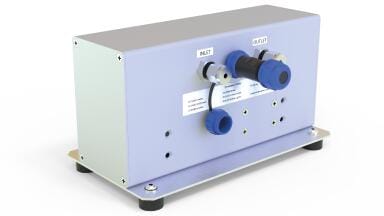
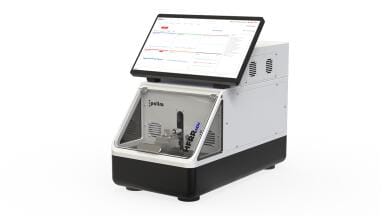
Central to the study was the Dresden EBIS-A electron beam ion source from Dreebit, which supplied a stable, high-purity beam of carbon-13 ions in the exact charge state required for spectroscopy. The system is capable of producing highly charged ions across almost the entire periodic table, making it well suited to precision spectroscopy experiments.
Carbon-13 is particularly attractive for nuclear studies due to its well-defined structure and widespread use as a tracer. Building on this success, the researchers now plan to extend the technique to radioactive carbon-14. Although far more challenging to work with, carbon-14 measurements could dramatically improve understanding of its nuclear structure and expand laser spectroscopy methods into the study of unstable isotopes.
“We are delighted that our ion source played a role in enabling such high-precision measurements,” said Lars Großmann, Managing Director of Dreebit. “This work shows how advanced ion beam technology can support fundamental spectroscopy experiments that push the limits of what can be measured.”
More information online
ILM 51.6 Sept 2026





 Product directory