Mass spectrometry & spectroscopy
Published over 14 years ago. See the latest and most current information on Mass spectrometry & spectroscopy.
Researchers at Duke University have utilised the LP920 laser flash photolysis spectrometer from Edinburgh Instruments to experimentally observe excited triplet states of individualised single-wall carbon nanotubes (SWNTs) for the first time. These SWNT triplet excitons have lifetimes of the order of microseconds, differing vastly the picosecond lifetimes characteristic of the well-known SWNT singlet excitons. This research provides new insights into the fundamental photophysical processes of 1-dimensional carbon-based nanostructures.
SWNTs facilitate ballistic charge transport and fast singlet exciton migration over long distances; such properties are highly useful for electronic and photonic devices. The experimental identification of the SWNT triplet exciton state expands significantly the scope of nanotube electron and energy migration reactions that can be exploited.
Nanosecond pump-probe transient absorption spectroscopic experiments of purified, polymer wrapped SWNTs in a variety of solvents was carried out using the LP920 laser flash photolysis spectrometer equipped with the L900 software for control and data acquisition. A previously unidentified transient absorption band at 1150 nm is shown to correspond to a SWNT T1 to Tn transition; the lifetime of the SWNT triplet excited state was found to be 17.4 and 6.5 μs, espectively, in D2O and DMSO solvents.
In this study, (6,5)-chirality enriched semiconducting SWNTs that were helically wrapped by an aryleneethynylene polymer monolayer at periodic and constant morphology, were utilised. These polymer-wrapped SWNTs maintain uniform structural morphology in both D2O and DMSO solvents, and provide versatile constructs in which to probe nanotube triplet exciton states.
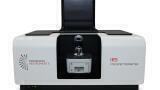
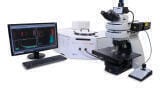
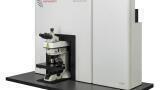
The LP920 laser flash photolysis spectrometer is a fully automated turnkey solution for the reliable and accurate measurement of transient absorption either in spectral and/or kinetic mode. It has a large sample chamber to house a variety of sample holders.
ILM 51.6 Sept 2026





 Product directory