
Mass spectrometry & spectroscopy
Published over 10 years ago. See the latest and most current information on Mass spectrometry & spectroscopy.
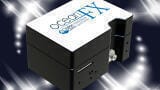
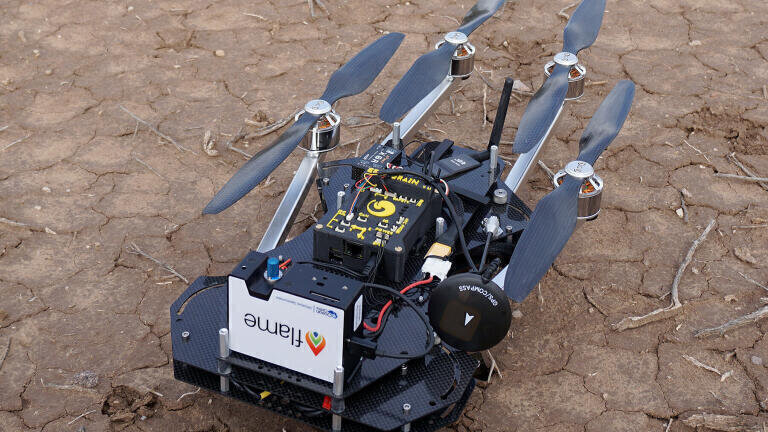
Ocean Optics has sponsored a team of volcanologists on a mission to study volcanoes in the South American Andes, providing Flame miniature spectrometers and accessories. The 'Trail by Fire' project, funded by a grant from Land Rover and the Royal Geographical Society, will attempt to quantify the total amount of volatile chemical elements released by volcanoes in Chile and Peru. Ocean Optics’ Flame spectrometers will be flown directly below volcanic plumes on UAVs, taking differential optical absorption spectrometry (DOAS) measurements to quantify sulphur dioxide (SO2) levels, with the goal of better understanding volcanic effects on climate.
The Flames will be part of world’s first mobile volcano observatory, a specially outfitted Land Rover Defender 110, reaching some of the most remote and hard to study volcanoes on earth. Faced with difficult to navigate terrain and high altitudes, the team chose TurboAce Matrix UAVs to carry the Ocean Optics spectrometers to the volcanic plumes for measurement. Using UAVs allows the researchers to get closer to the plume and collect a full cross section of measurements. This will provide higher accuracy than the ground-based measurements typically used in DOAS. The Flame’s small size and low weight (265 g) were key factors in its selection, as payload weight, always an important consideration for UAVs, is especially critical at high altitude.
More importantly, despite its small size, the Flame offers the high resolution and thermal stability required for DOAS measurement, allowing the team to measure very small fluctuations in SO2 content. The spectrometers are controlled by the UAV’s onboard microprocessor, integrated with Ocean Optics’ open source SeaBreeze drivers.
Spectra collected by the Flame are saved to the UAV’s onboard memory and wirelessly beamed back to the ground station. This real-time feedback will allow the team to verify operation and make measurement adjustments as the UAV is in flight. The spectrometer’s modular design, with interchangeable slits to adjust resolution and throughput, will enable the team to respond quickly and easily to changing conditions in the field.
“This is truly a great application for our next generation miniature spectrometers,“ explained Ocean Optics Product Manager Henry Langston. “We love the opportunity to partner with our users, helping them take our science to new places. This is why we have a team of applications engineers on staff, to work with customers to solve challenging measurement problems. It’s been so exciting to see the Trail by Fire project come together.”
ILM 51.6 Sept 2026




 Product directory