Mass spectrometry & spectroscopy
Published over 4 years ago. See the latest and most current information on Mass spectrometry & spectroscopy.
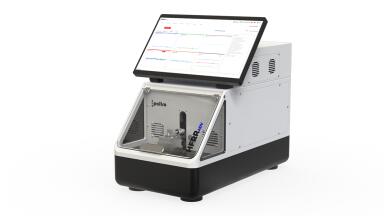
NMR spectroscopy characterises the chemical structure of battery electrolyte solvents and additives. Importantly, quantitative broadband benchtop NMR additionally determines the precise concentrations of solvents, trace impurities, additives, and decomposition products. In a new application note, we highlight the relevant quantitative NMR (qNMR) experiments and their importance for optimising next generation battery performance, raw materials checking and improving quality control.
For non-destructive investigations of the chemical nature of materials in the liquid state, NMR spectroscopy is an extremely versatile method employed extensively in research and development. NMR provides information about individual atoms within the compounds, including not only their chemical environment and molecular structure, but also on their quantity. This makes the technique an ideal tool for rapid reaction monitoring and quality control. In an NMR spectrum, the areas under peaks are directly proportional to the number of the atom(s) they are generated from. Quantitative NMR (qNMR) determines the ratios or absolute concentrations of species in a sample.
To read the full application note, visit our website.
ILM 51.6 Sept 2026





 Product directory