Microscopy & microtechniques
Published over 15 years ago. See the latest and most current information on Microscopy & microtechniques.
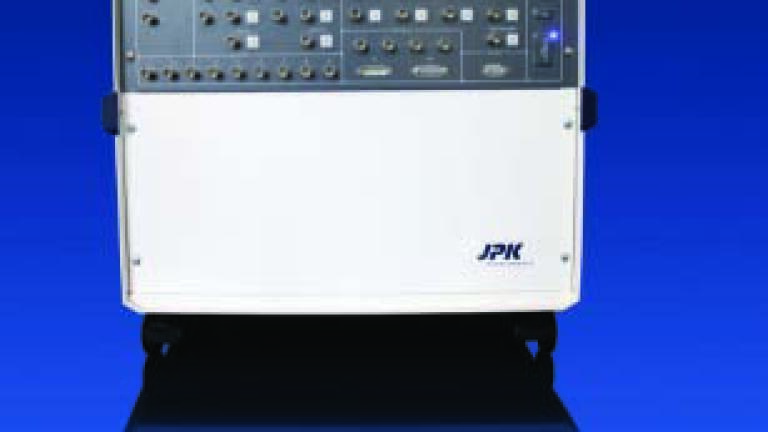
JPK Instruments announces the Vortis™ Advanced, the new standard in SPM Control systems with the lowest noise and highest signal speeds seen to date. Providing the highest performance of electronics controller for scanning probe microscopes, SPM is one of the driving forces behind JPK’s development programs. Recent engineering breakthroughs have enabled the elimination of DSP technology. JPK has utilised the new Power-PC hardware with the latest FPGA architecture to deliver the highest digital performance.
Vortis Advanced is now available with all of JPK’s SPM systems: the NanoWizard® 3, the ForceRobot® 300 and the CellHesion® 200 now deliver even more superior results. With fast signal acquisition and control, advanced feedback and analysis are the keys for a modular and ultra flexible controller. The lowest noise levels are achieved using a new grounding concept, intelligent signal conditioning, temperature stabilised oscillators and passive cooling.
Vortis Advanced has been designed so the builder of their home-designed and built SPM heads may utilise these performance benefits. It comes with a large number of user accessible analog and digital signal channels, fast responding lock-in amplifiers and high-end piezo drivers with closed loop control. Flexibility of design gives the user the ability to work with different probe configurations requiring different levels of control. Synchronisation with external instruments including spectrometers, potentiostats and optical detection devices is provided too.
Control systems with the best hardware still require another vital element, powerful and modular software. JPK supplies the new package, SPMControl v4 to deliver ease of use plus the ability for user customised experiments through the implementation of many powerful data analysis and processing routines such as multi-channel oscilloscope functionality, advanced filtering, batch processing and channel overlay.
ILM 51.6 Sept 2026




 Product directory