Microscopy & microtechniques
Published over 11 years ago. See the latest and most current information on Microscopy & microtechniques.
LaVison BioTec report on the research of Dr Matteo Iannacone of the San Raffaele Scientific Institute in Milan where intravital microscopy is being applied to the study of host-viruses and associated immune responses.
Matteo Iannacone, MD, PhD is the Group Leader in the Division of Immunology at the San Raffaele Scientific Institute, Milan, Italy. His research program seeks to dissect the complex dynamics of host-virus interactions with a particular focus on the development and function of adaptive immune responses. Since it is still beyond the reach of even the most sophisticated in vitro methodology to simulate the complex interplay of physical, cellular, biochemical and other factors that influence cell behaviour in microvessels and interstitial tissues, the group uses intravital microscopy. This technique is complemented by more traditional molecular, cellular and histological approaches, thus characterising host-virus interactions at the molecular-, single cell- and whole animal-level.
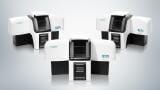
Discussing the selection of instrumentation, Dr Iannacone said “The choice of the TriM Scope from LaVision BioTec was driven by the desire of the group to couple a state-of-the-art multiphoton microscope with the possibility of customising the entire system to our need to work in vivo. In these studies, both confocal immunofluorescence histology and correlative light-electron microscopy are used too. Overall, it was possibility of performing in vivo imaging that pushed us to our choice of the TriM Scope.”
Dr Iannacone is developing a new method where he will use the TriM Scope to map blood flow velocity. In vivo microscopy allows mapping of blood flow velocity at a high spatial and time resolution in the complex network of vessels constituting the hepatic microcirculation while simultaneously maintaining the morphologic information related to the dynamic parameters of vessels and immune cells.
ILM 51.6 Sept 2026



 Product directory