Microscopy & microtechniques
Published over 17 years ago. See the latest and most current information on Microscopy & microtechniques.
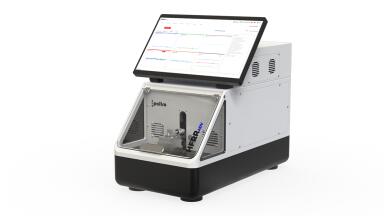
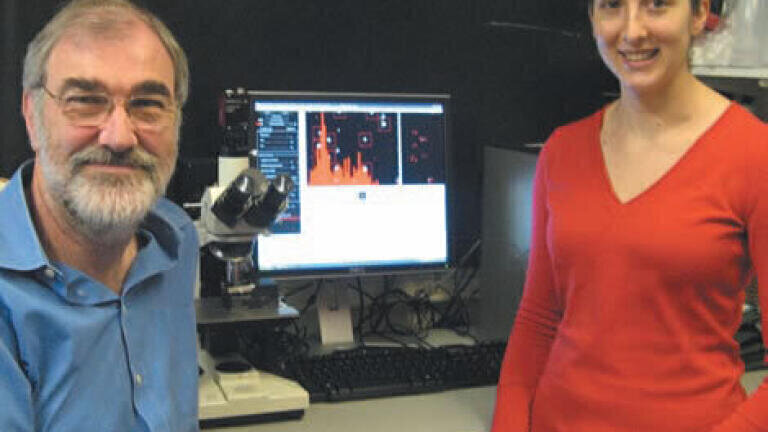
NanoSight’s unique particle-by-particle technology is showing promise at detecting nanoparticles in blood that may prove to be predictors for pre-eclampsia. Professor of Reproductive Sciences, Ian Sargent, of the University of Oxford is leading a team looking at prediction and early diagnosis of pre-eclampsia. Professor Sargent, who is based at the Women’s Centre of the John Radcliffe Hospital, comments: “There is no other condition in maternity that so greatly threatens both mother and child. In the UK alone, pre-eclampsia requires induction of
between 7,000 and 12,000 premature births annually and the condition is common to around 4% of pregnancies. The condition occurs at any time after mid-pregnancy, has no symptoms for most of its course and is relentlessly progressive. Additionally, it is unpredictable.” Professor Sargent’s work is supported by the Oxford Biomedical Research Centre, through funding from the Department of Health’s NIHR and encompasses a range of candidate biomarkers. In addition to well-documented blood-based expressed proteins, are microparticles
(100 – 1000nm) and exosomes (30-100nm).
These are nanoscale vesicles released by the placenta and maternal blood and endothelial cells. Whilst high levels of these particles are observed to coincide with the onset of re-eclampsia, their detection is a challenge. Professor Sargent, added: “Our aim is to count and size the microparticles and exosomes present in the mother’s blood. Ultracentrifugation fails to separate the smaller exosomes adequately as they have similar density to the background plasma. Neither can these exosomes be detected with flow cytometry, which is essentially limited to sizes greater than 500nm. NanoSight, however, can uniquely detect and then size these disparate populations rapidly and with particle-by-particle resolution.”
ILM 51.6 Sept 2026





 Product directory