News
Published over 11 years ago. See the latest and most current information on News.
2014 was a fantastic year for the world of science. Not only were great strides made in the realms of pharmaceuticals, neuroscience and renewable energy efficiency, but mankind was also successful in landing an aircraft on a moving comet. Here’s a quick look back over five of the best scientific highlights from 2014.
Landing an aircraft onto a comet might not sound that impressive, if you don’t know much about the mechanics of the operation. A project that took 12 years to develop basically sought to drop a tiny lander from the Rosetta satellite onto a rapidly moving fragment of extra-terrestrial rock. The free-fall involved was in excess of 20km, and the whole operation was being remotely conducted at a distance of half a billion kilometres and a time delay of almost half an hour. Still unimpressed? Tough crowd. This story, How the Philae Lander Landed on an 18km/s Comet, goes into even more detail about the intricacies of the defining scientific achievement of 2014.
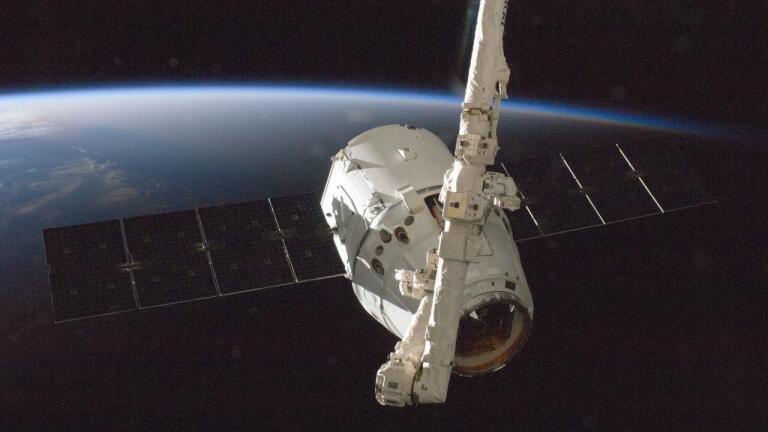
Though the Rosetta mission may have taken most of the headlines, there were plenty of other scientific breakthroughs in 2014, including another iconic landing. The Orion capsule is the first aircraft to leave the Earth’s orbit since the Apollo missions of the late 60s and 70s, and is being groomed to send astronauts to the Moon, Mars, asteroids, and perhaps beyond. All of that won’t come about until 2021 at the earliest, but for now Orion can bask in its triumphant test landing in December.
Three separate science prizes were claimed by nine individual winners in the fields of physiology or medicine, physics and chemistry, respectively. John O’Keefe and Edvard and May-Britt Moser picked up the first gong for discovering positioning system-like cells in the brain, while the physics award was picked up by Shuji Nakamura, Isamu Akasaki and Hiroshi Amano for their developmental work on blue light-emitting diodes (LEDs). Meanwhile, Stefan Hell, Eric Betzig and William Moener walked off with the chemistry prize for furthering research in nanoscale microscopy. For more information on the winners, and on the chemistry prize in particular, see the new story: Who Won the 2014 Nobel Prize for Chemistry?
For the first time ever, scientists were able to resurrect a sample of moss that had been trapped in a sheet of Antarctic ice for more than 1,500 years. Such a stunning discovery – that an organism can survive being frozen for such an extended period of time – may well drastically affect the way we investigate how life can subsist over generations, and how we can prolong it in future.
On the subject of Antarctic ice, the West Antarctic ice sheet also entered the first stage of an irreversible decline this year, confirming fears about climate change. Whether or not the shift in temperature which is causing the melt is a direct consequence of human action is a matter that remains up for debate; but surely, climate change itself now does not.
With such concern about climate change mounting, increasing pressure has been put upon corporations and politicians to address our environmental footprint. Some strides have been made in this realm through the medium of solar power, which has seen its prices fall drastically, making it affordable for regular homeowners and even available to buy at stores such as Ikea. Other, more complex forms of constructing solar panels (than tradition silicon) are even reaching energy efficiency levels of 40%. Roll on green power!
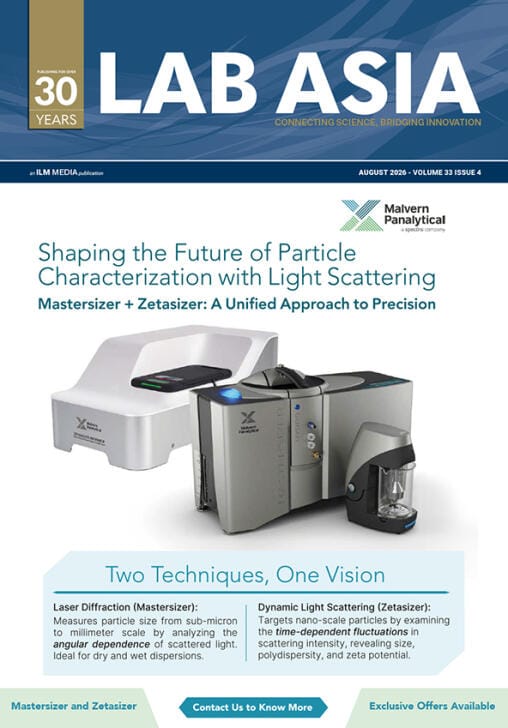
Lab Asia 33.4 - August 2026
.jpg)

 Product directory









,-photo-Karin-Allander.jpg)





,-photo-Karin-Allander.jpg)