News
Published over 12 years ago. See the latest and most current information on News.
To remain healthy, it is necessary to eat a wide variety of foods, particularly fresh fruit and vegetables. Although pesticides play vital roles in protecting food crops from pests (e.g. fungal diseases and insects), there is concern about the potential levels of pesticide residues in the edible produce. Examples of chemically-related pesticides include:
Indeed, government’s legislation sets strict limits on the concentrations of residual pesticides and their metabolites in fresh food.
Most countries’ pesticide programs are made up of three components: Regulatory surveillance of domestic and imported food, total diet studies and monitoring. Each food group can have more than 30 individual tolerances. For example, grapes have more than 70 individual strict tolerances ranging from 0.05-60 ppm for a particular pesticide. Thus, it is vital to have reliable analytic techniques to measure residual pesticide levels in a wide variety of foods.
The QuEChERS method (Quick, Easy, Cheap, Effective, Rugged and Safe) is an easy and cost effective way for analytical chemists to determine the levels of pesticide residues in many types of food. The original QuEChERS method was modified to ensure that pH dependent chemicals could be efficiently extracted to minimize their degradation (e.g. base and acid labile pesticides) and also to facilitate the detection of many more types of compounds.
Testing laboratories must possess pesticide reference standards of known quality and concentration as well as samples of all their known metabolites - this is the first requisite. The PerkinElmer’s Supra-d QuEChERS dispersive method turns sample preparation into an easy two-step process by using the QuEChERS method, which is the most popular sample preparation technique used to analyse pesticide residues. It is useful in that it eliminates complex liquid extraction methods and extends the range of the recovered pesticides.
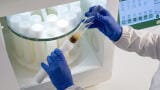
The QuEChERS procedure is fast and easy, improving lab productivity and results in fewer errors. Food samples (fruits, vegetables, tobacco, etc.) are initially homogenized in a blender. The prepared samples are then placed in centrifuge tubes with a detection reagent and agitated for 60 seconds. The reagents used obviously depend on the type of samples to be analysed. Then, each sample is put through a cleanup column prior to analysis by gas-liquid chromatography. Thus, samples can be processed quickly using the QuEChERS method.
To analyse large numbers of samples whose pesticide treatment history is usually unknown, analytical methods are used that are capable of simultaneously determining a number of pesticide residues. These multi-residue analysis techniques can measure the levels of approximately half of the approximately 400 pesticides within the required government tolerances, and many others that have no tolerances. Numerous other analytic methods available to determine a wide range of pesticide levels in food are documented by the U.S. You can find this list of pesticide analytical methods & procedures on the Environmental Protection Agency.
A blog post explaining the sustainability of wooden windows by Paul at Bebington Glazing.
Recently, two leading European food testing laboratories have begun to work in tandem with Thermo Fisher Scientific at their new Pesticide Analysis Center of Excellence. The goal is to produce improved methods for the detection and measurement of pesticide residues in food. You can read about it here: Leading EU and UK Pesticide Testing Labs Announce Collaboration.
ILM 51.6 Sept 2026



 Product directory