News
Published over 11 years ago. See the latest and most current information on News.
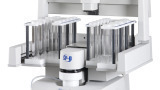
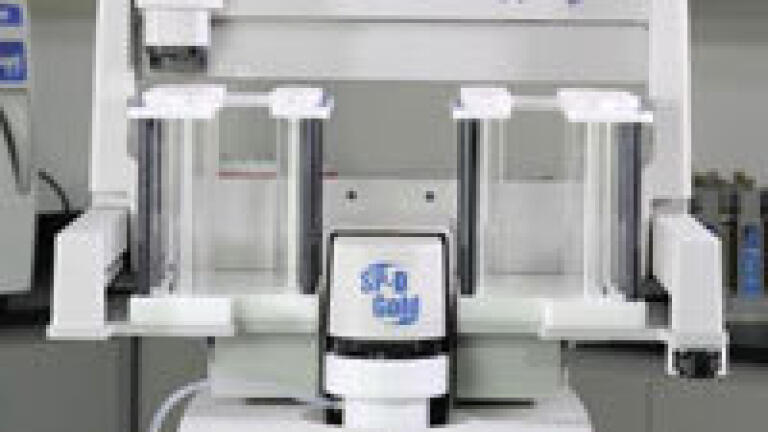
The new Discover SP-D Gold from CEM, described as a first-of-its-kind system, allows high temperature digestion of difficult sample matrices in a compact, benchtop platform. Departing from the traditional ‘box style’ multi-vessel digestion systems, the Discover SP-D Gold is a compact, single vessel digestion unit better matched to lab workflow and ICP-MS processing. Samples are prepared sequentially and ready for analysis immediately, instead of waiting for an entire batch of 40 samples to process in a traditional system. With the optional 24 place autosampler, new samples can be added at any time and the unit can run attended, even overnight.
Operating at up to 700 psi and 300 °C the Discover SP-D Gold provides the necessary conditions to completely digest the most difficult of samples and provide a clear solution for analysis. It utilises 80 mL quartz vessels with easy-to-use, snap-on caps allowing fast and easy sample preparation. The unit is pre-programmed with methods for pharmaceutical, food, plastics, oils, organics, inorganics, metals, and US EPA Methods. Custom programs can be created easily and quickly. Our 21 CFR Part 11 compliant software documents run data for each sample. A full range of analyte detection and sample preparation instrumentation and a brand new rapid sodium analysis system were also on show.
Lab Asia 33.4 - August 2026


 Product directory