Research news
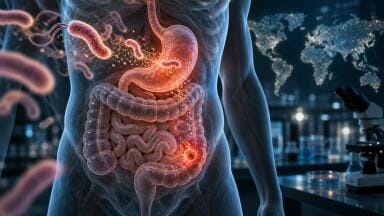
Scientists have identified a bacterium from the human urinary tract that can convert the steroid precursor DHEA into testosterone in the laboratory, a discovery that raises fresh questions about the role of microorganisms in prostate biology
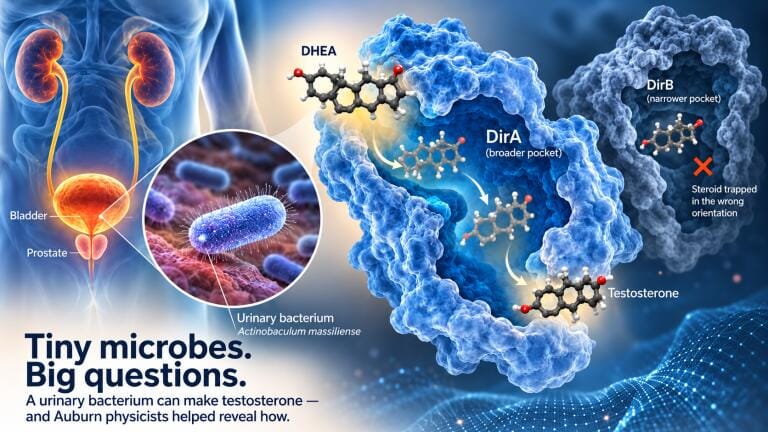
Many prostate cancers depend on androgen hormones – including testosterone – to grow which is why treatments for advanced disease often try to reduce testosterone production or block its effects. Scientists have now identified that a bacterium from the human urinary tract is an unexpected participant in androgen chemistry. Laboratory experimentation with the bacteria has shown it can convert steroid precursor dehydroepiandrosterone (DHEA) into testosterone.
The finding does not mean the bacterium causes prostate cancer, nor does it show that bacterial testosterone reaches tumours or changes the course of disease. It does, however, reveal a previously unknown microbial route to a hormone central to prostate biology. The study brought together experts in microbiology, cancer biology, chemistry, genomics and computational physics, including researchers at Auburn University (AU), Alabama, USA, who explained how the bacterial machinery works at the atomic level.
“We are not saying that these bacteria cause cancer. What we now know is that they possess the molecular machinery to produce testosterone. Because prostate cancer is so closely connected to androgen signalling, that is something worth understanding,” said Dr. Rafael Bernardi, co-author of the study, and associate professor in the Department of Physics at AU.
For decades, urine was assumed to be sterile, and the urinary tract was excluded from the original Human Microbiome Project. It is now know that it contains its own community of microorganisms – the urinary microbiome – though most research in this field has focused on which microbes are present, rather than what they (might) do.
The team examined bacteria isolated from men’s urine samples collected before prostate biopsy, using a rapid screening method they developed – the Human Sterolbiome Discovery High-throughput (HSDH) assay – to find organisms capable of transforming steroids. Among those identified was Actinobaculum massiliense which produced intermediate steroid molecules when supplied with DHEA, and ultimately, testosterone.
“The urinary microbiome has often been studied by asking which organisms are there. We wanted to understand what those organisms are capable of doing. The discovery of this androgen-producing pathway gives us specific genes and enzymes that can now be investigated,” said Dr. Jason M. Ridlon, who conceptualised and supervised the study.
The researchers searched the bacterium’s genome for the genes responsible and identified two candidates – named DirA and DirB – for DHEA isomerase reductase. DirA proved unusually versatile, performing several steroid transformations and letting the bacterium reach testosterone by more than one route. DirB, despite appearing similar, was shown to perform only part of that chemistry.
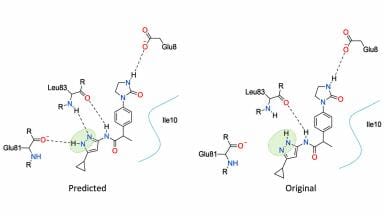
Bernardi’s group at AU modelled DirA and DirB in three dimensions and ran molecular simulations to follow what happened as steroid molecules entered each enzyme. A molecule does not react simply because it fits inside a protein; the correct part must face the enzyme’s catalytic machinery, at the right distance and angle.
DirA has a broad, open pocket that lets the steroid reposition itself through the pathway, whereas DirB is much narrower which often sees the steroid misalign and face the wrong way.
“At this scale, chemistry depends on choreography. The steroid has to be in the right place, facing the right way, at the right moment. One enzyme gives it room to do that. The other does not,” Bernardi said.
“A static structure can show us that a molecule fits inside a protein. The simulations tell us whether it can reach the precise orientation needed for the reaction,” said Raissa Rosa, a doctoral candidate in Bernardi’s group, who performed the computational studies.
Testosterone and other androgens are essential to normal prostate function but can also promote the growth of many prostate cancers by activating the androgen receptor. The discovery that a urinary bacterium can generate testosterone introduces a novel question. Could microbial metabolism contribute to the androgen environment near the prostate? This study does not answer that, and researchers still need to determine if the pathway is active inside the body. Still, the discovery gives scientists specific genes to investigate in urinary microbiome datasets.
“The next step is to move from molecular capability to physiological relevance. We now understand how the bacterial enzymes can perform the chemistry. The larger question is whether that chemistry has a meaningful effect in the complex environment of the human body,” Bernardi said.
The work may also have implications beyond prostate research whereby urinary steroids could be measured in diagnostics and in testing for performance-enhancing drugs, and microbial metabolism may become another factor in interpreting those profiles.
The study brought together researchers from the University of Illinois Urbana-Champaign, Auburn University, Virginia Commonwealth University and Carle Foundation Hospital.
For further reading please visit: 10.1038/s41467-026-77382-7
ILM 51.6 Sept 2026


 Product directory


.jpg)
.jpg)










,-photo-Karin-Allander.jpg)