Research news
Researchers at the University of East Anglia have found that CADD522, a compound originally developed to treat cancer, may also strengthen bone and reduce fat gain in post-menopausal mice – raising the prospect of a single treatment for osteoporosis and the wider metabolic changes linked to menopause
A study from the University of East Anglia (UEA), Norwich, UK, has revealed that the compound CADD522 may protect against bone loss while also reducing body fat and reversing some of the metabolic changes associated with menopause.
CADD522 was originally developed to block a protein that helps to drive the growth and spread of several cancers. Scientists at UEA’s Norwich Medical School have now found that the treatment appears to strengthen bones in post-menopausal mouse models while also helping the animals to stay leaner.
“Osteoporosis affects around one in three women over the age of 50, leaving [them] vulnerable to painful fractures that can seriously impact quality of life,” said Dr Darrell Green, lead researcher at UEA’s Norwich Medical School.
“Current treatments exist, but many are plagued by side effects, safety concerns or inconvenient dosing schedules that make long-term use difficult,” he said.
“We have uncovered an entirely new way of tackling the disease. We found that a drug originally developed [in] cancer could help millions of women facing the twin challenge of fragile bones and midlife weight gain.
“We hope our work could lead to a new generation of osteoporosis treatments that tackle bone loss while also addressing some of the wider metabolic consequences of menopause,” Green added.
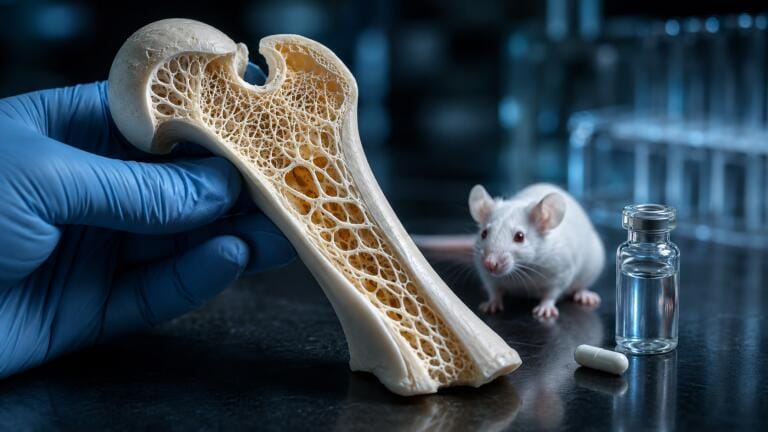
To reach these findings, researchers used mice that had undergone surgery to mimic the hormonal changes seen after menopause. Animals treated with CADD522 for eight weeks showed significant improvements in bone health. Scans revealed increased bone volume and better preservation of the delicate honeycomb-like structures inside bones that are crucial for strength and resilience.
Blood tests suggested the drug stimulated new bone growth, without interfering with the body’s normal process of breaking down and rebuilding bone.
“This is particularly important because many existing osteoporosis drugs work by suppressing bone loss which can sometimes lead to complications when used for long periods,” Green said.
“But the biggest surprise came when we looked beyond bone health. The mice receiving CADD522 weighed less than their untreated counterparts despite eating the same amount of food.
“They also had less body fat and fewer fat deposits accumulating inside their bone marrow – a process that is commonly seen after menopause and is linked to declining bone health,” he explained.
The team also examined brain tissue and found the drug appeared to reverse several menopause-related changes in fatty acids. Levels of beneficial omega-3 fats remained largely intact – including docosahexaenoic acid – while a number of other lipid abnormalities shifted back towards healthier patterns.
“We didn’t directly test for memory or [other cognitive] ability but our work raises questions about whether this drug could one day help address wider menopause-related health problems,” Green added.
The treatment’s prospects as a future medicine also received a boost from safety testing. Experiments in mice, rats and dogs found CADD522 could be taken orally and was well tolerated. The team also found the drug appeared to be metabolised more slowly in human tissue than in rodents, potentially improving its performance in people.
For further reading please visit:
RUNX2 inhibitor CADD522 improves bone microarchitecture and lipid metabolism in post-menopausal bone loss
ILM 51.6 Sept 2026



 Product directory


















,-photo-Karin-Allander.jpg)








.jpg)
