News
Published over 5 years ago. See the latest and most current information on News.
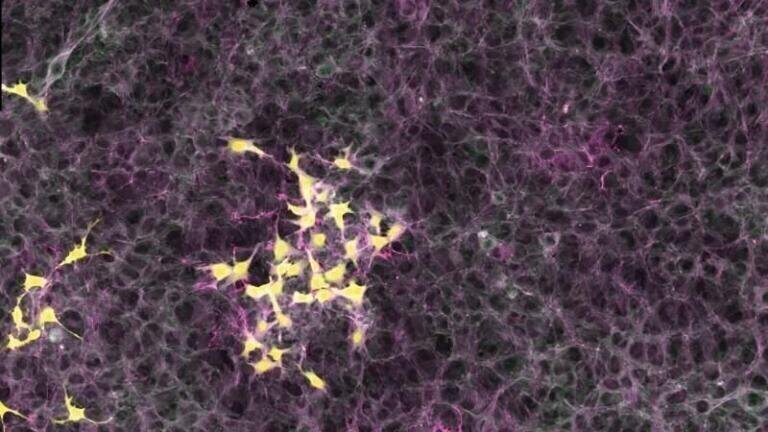
As part of an international consortium researchers at the Francis Crick Institute have analysed the whole genomes of tumour samples from over 2,600 patients with different types of cancer, identifying a high prevalence of genetic diversity within individual tumours, which they further characterised. This variation is a challenge for doctors as a treatment that works for one group of genetically related tumour cells, or subclones, may not be effective against another. And certain subclones can initiate tumour spread or drug resistance at different points during the course of the disease.
From analysis of the whole-genomes of 2,658 cancer samples, spanning 38 types of cancer, the scientists found that 95% of samples contain at least one identifiable subclone.
Peter Van Loo, author and group leader of the Cancer Genomics Laboratory at the Crick said: “Cancers are constantly changing over time, so it’s important to recognise that a sample taken from a tumour reflects a single point in time and the cancer will continue to evolve after this. They can grow into a patchwork with sections driven by different mutations and evolutionary pressures.
“Understanding more about the evolution of subclones, why they develop in one direction over another, as well as how common they are, could help doctors better predict the levels of and types of variation likely to be present in a specific cancer type.”
Research in this area has already shown that understanding this genetic diversity can be harnessed to predict survival or relapse, which could help doctors and patients make important treatment decisions.*
The researchers have created an open-access resource that documents the genetic variation they found in the subclones. Their computational methods are also available for others to analyse cancer genomes.
Maxime Tarabichi, author and postdoc in the Cancer Genomics Laboratory at the Crick says: “We combined a number of high-quality computational methods to analyse these complex genetic data. Reassuringly, when we put the methods together in different ways and put them through independent simulations, the results always gave findings that fit the same story.”
This work was carried by the Pan-Cancer Analysis of Whole Genomes consortium, including the Francis Crick Institute, Wellcome Sanger Institute, Big Data Institute at University of Oxford, Broad Institute of MIT and Harvard, University of Toronto, Vector Institute, The University of Texas MD Anderson Cancer Center, Cancer Research UK, University of Leuven, Ontario Institute for Cancer Research, Oxford NIHR Biomedical Research Centre and others.
Published in Cell
Further information online
ILM 51.6 Sept 2026




 Product directory