News
The UK is set to turn used nuclear fuel into a sustainable source of cutting-edge cancer treatments, following a major £18.8 million investment into a national programme developing targeted alpha therapies.
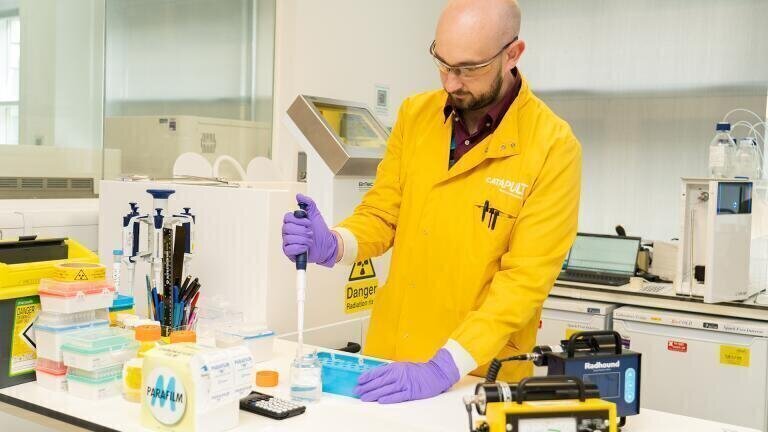
The project — led by the UK National Nuclear Laboratory (UKNNL) and Medicines Discovery Catapult (MDC) — will harvest lead-212, a powerful therapeutic radionuclide, from recycled nuclear materials. This isotope can be used to create Targeted Alpha Therapies, an emerging class of precision medicines designed to destroy cancer cells with exceptional accuracy while minimising damage to healthy tissue.
Although radionuclides are widely used in medical imaging, their use as cancer-killing agents is only now becoming viable. Lead-212 is particularly promising: even an infinitesimally small amount can power treatments for thousands of patients, and the UK has unusually large sovereign reserves — making the supply both secure and highly scalable.
UKNNL has developed a process to extract minute quantities of this isotope from materials that have already served in the nation’s energy infrastructure. What was once considered nuclear waste could soon become a life-saving medical resource.
Funding from Innovate UK’s Sustainable Medicines Manufacturing Innovation Programme (SMMIP) will enable the consortium to build the infrastructure needed to move these therapies towards clinical trials.
Julianne Antrobus, CEO of UKNNL, said:
“Through access to the UK’s sovereign supply of lead-212, we have a unique opportunity to transform our nuclear expertise into life-saving cancer treatments.”
Professor Chris Molloy, CEO of MDC, added:
“Lead-212 is an untapped national asset with extraordinary medical potential. This programme positions Britain at the forefront of precision radiochemistry and next-generation cancer care.”
The consortium brings together scientific, nuclear, radiochemistry and biotech expertise, including Cyclife Aquila Nuclear, PentaBind, Iksuda Therapeutics, Seda, and entX — forming the UK’s most comprehensive ecosystem for developing and scaling targeted alpha therapies.
If successful, the programme could unlock a new class of sustainable cancer medicines and place the UK at the centre of a rapidly accelerating global field.
More information online
ILM 51.6 Sept 2026





 Product directory