News
Published over 10 years ago. See the latest and most current information on News.
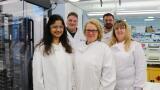
Renewed funding of more than £7million from pharmaceutical giants Boehringer Ingelheim, GlaxoSmithKline and Merck is to support Dundee University’s continued research in multiple therapeutic areas, including cancer, arthritis, lupus, hypertension and Parkinson’s disease over the next four years.
The £7.2 million will secure 38 posts at the University’s Division of Signal Transduction Therapy (DSTT), comprising 22 research teams at the School of Life Sciences, 12 of which are based within the Medical Research Council Protein Phosphorylation and Ubiquitylation Unit (MRC-PPU).
Founded in 1998, the DSTT is the world’s longest running collaboration between academic research laboratories and the pharmaceutical industry, having attracted £58 million in funding since its inception. Professor Dario Alessi, Director of the MRC-PPU, said, “I am absolutely thrilled that we have been able to renew this remarkable 18-year flagship collaboration with our pharmaceutical partners. This alliance has never been more important as our Dundee-based researchers are making such tremendous progress in better understanding human diseases such as Parkinson’s, immune conditions and cancer.
The DSTT helps the participating pharmaceutical companies to develop improved drugs that target major ‘controller’ proteins in the body, focusing on enzymes called kinases and components of the ubiquitin system.
Dr Malcolm Skingle, Director of academic liaison at GSK, said, “At GSK, we believe that collaboration is key to helping convert groundbreaking science in to medicines. Working with experts outside our own labs enables us to benefit from each other’s skills and experience, as well as sharing risk – which makes all partners well placed to pursue the most promising avenues of research.
Dr Clive Wood, Corporate SVP of Discovery Research at Boehringer Ingelheim, said, “We have been delighted to be a member of the consortium and work with the outstanding scientific teams in Dundee. We have gained early insights that have helped to spark in-house discussions, ideation for new therapeutic concepts and generate better understanding of new cellular mechanisms of disease. We look forward to our future work together.”
ILM 51.6 Sept 2026


 Product directory


.jpg)










.jpg)