News
Published over 9 years ago. See the latest and most current information on News.
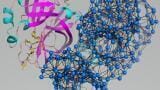
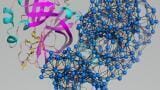
A scientist at the University of York has succeeded in conducting the first tests on a tiny rotating machine that is made entirely from DNA. The technology has potential applications in molecular processing, DNA computing, biomedical sensing and photonics.
In living things, DNA stores genetic information. However, it is also possible to use chemically synthesized DNA molecules to build artificial structures and devices that are so small they could fit thousands of times across the diameter of a human hair.
Most DNA nanomotors move in straight lines, and the few DNA machines that do rotate are generally unable to do so independently.
Dr Katherine Dunn, from the University of York’s Department of Electronic Engineering has now developed a DNA nanomotor that is designed to rotate autonomously. “Naturally occurring rotary molecular machines play extremely important roles in living things, and it is now possible to use DNA to make synthetic rotary motors that operate without external intervention. This work represents a significant advance, and the motor has a number of exciting potential applications.”
The research* was funded by the University of York’s Research Innovation Office and written by Dr Katherine Dunn, with co-authors from the Departments of Physics, Biology and Electronic Engineering. The University of York filed a patent application for the technology and commercial partners are now being sought to develop it further. Any interested parties are invited to get in touch, visit www.york.ac.uk
*Published in Royal Society Open Science.
Lab Asia 33.4 - August 2026
 Product directory