News
Published over 11 years ago. See the latest and most current information on News.
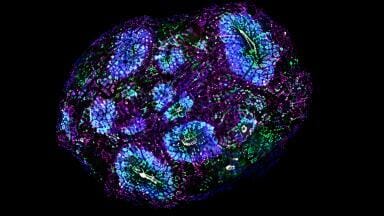
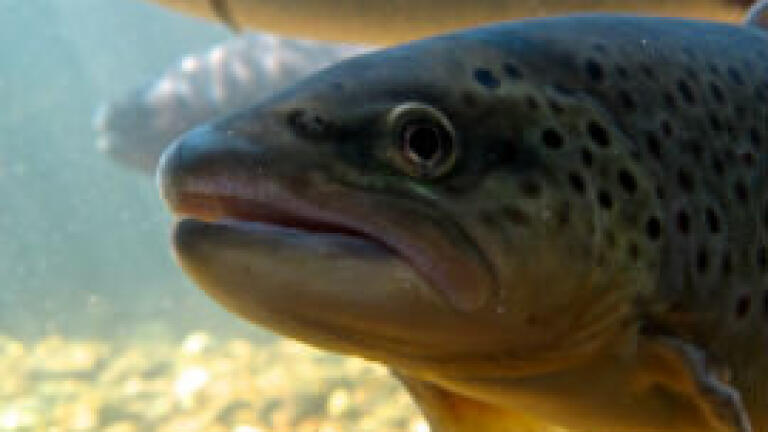
University of York scientists have helped develop a new test for contaminants in water using gill cells from rainbow trout grown in the laboratory. The test* is said to provide a more sustainable and cost effective alternative to the use of live fish, which are particularly sensitive to contaminants in water at the start of life and as they begin to grow. Every year, more than a million fish are used for toxicity testing and scientific research in the EU alone, with around 400 fish needed for a single fish early-life stage test.
Dr Roman Ashauer, from the University of York’s Environment Department, said: “The traditional work flow for chemical risk assessment has been test first, interpret later. We’ve taken a different approach, by first modifying a relatively simple mathematical model of fish growth and then feeding the necessary experimental data into this model.
“The issue is that animal testing is ethically controversial and expensive. Traditional testing requires a huge number of animal tests which is not practical. You need a test that you can do quickly and in the lab and at low cost. Our experiments only needed five days of testing and using the computer model allowed us to predict the effects on the fish after 30 days or 60 days.”
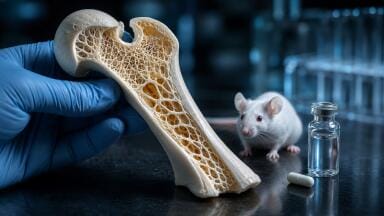
Dr Ashauer, who used raw data provided by agricultural research firm Syngenta, said the technique could have wider applications and reduce the need for experiments on animals. “We think it can also be used for rats and mice, anything that we want to test the effects of growth on. The general idea behind this kind of model can be transferred to small mammals.”
The EU-funded project was developed by the Swiss Federal Institute of Aquatic Science and Technology, in collaboration with the Swiss Federal Institute of Technology in Zurich, the École Polytechnique Fédérale de Lausanne and the University of York.
*The results have been published in the journal Science Advances
Lab Asia 33.4 - August 2026



 Product directory