Pumps and valves
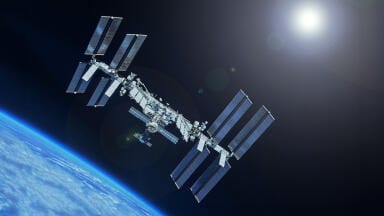
Above the thin veil of Earth’s atmosphere, space presents a fascinating yet unforgiving environment: microgravity, extreme temperature shifts, and ultra-high vacuum conditions. For researchers, these are not barriers but opportunities to uncover new principles of science and engineering. Long before experiments reach a rocket or the International Space Station (ISS), their success depends on laboratories on Earth that simulate the vacuum of space - allowing every variable to be tested and every process understood before launch. At the heart of this recreation lies something invisible but essential: vacuum technology.
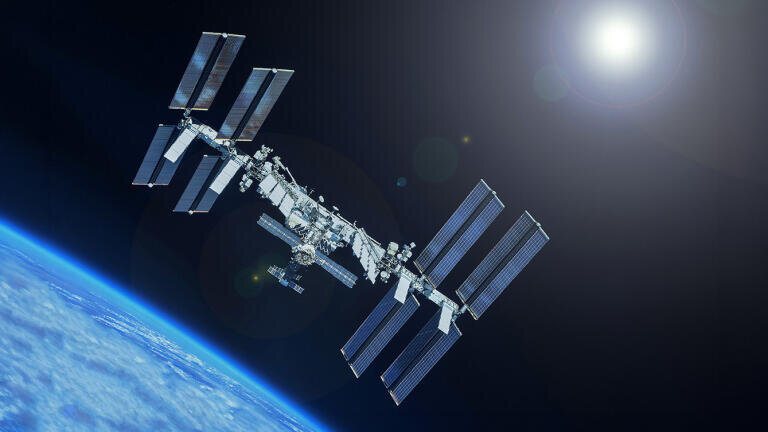
Imagine a control room monitoring experiments aboard the ISS. Screens display streams of data as metallic samples are melted, cooled, and observed under microgravity. Freed from Earth’s gravity, convection currents disappear, heavier elements no longer sink, and lighter ones no longer rise. Materials reveal their true physical behaviour, offering insights into heat transfer, flow, and solidification that drive advances in aerospace design, turbine efficiency, and additive manufacturing.
Before any experiment reaches orbit, it begins in Earth-based laboratories. Here, researchers recreate space-like conditions using ultra-high vacuum systems reaching pressures as low as 10⁻⁸ hPa. This is where the Busch Group provides enabling technology, supplying high-performance vacuum pumps and systems that help create stable, low-contamination environments. Combined with precision control and specialised chambers, these setups reproduce orbital conditions with remarkable accuracy.
Temperature extremes are simulated, leaks eliminated, and surface conditions carefully controlled. Even coatings are designed to replicate the darkness and thermal behaviour of space. In these environments, scientists validate experiments with confidence before they face the real void of orbit.
Without vacuum, such testing would be meaningless. Air molecules would distort measurements and mask true behaviour. In vacuum, matter behaves as it truly is.
Some experiments require only minutes in space. Sounding rockets - suborbital research vehicles - provide around 20 minutes of microgravity before returning to Earth. Within compact modules, materials are processed, printed, or solidified while the rocket briefly reaches altitudes above 250 kilometres. Within minutes of landing, data is already being analysed.
Looking ahead, vacuum testing is also shaping in-orbit manufacturing, where spare parts and structures may one day be produced directly in space.
Though rarely visible, vacuum technology remains the silent backbone of space research - bridging Earth-bound laboratories and the frontiers of exploration, with Busch enabling much of the groundwork that makes it possible.
More information online
ILM 51.6 Sept 2026




 Product directory















.jpg)