Raman
A novel SERS method using bismuth nanoparticles has achieved one of the lowest detection limits reported for lead ions in water, offering a low-cost alternative to conventional testing
Lead is a highly toxic and persistent heavy metal that poses serious risks to human health, and the detection of lead ions in water is essential to protect public health, support agricultural safety and safeguard international trade. Conventional detection methods have often been limited by expensive instrumentation and complex procedures.
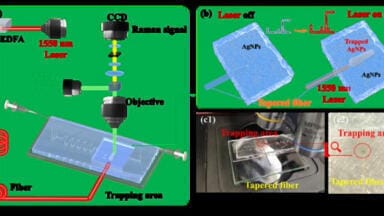
Surface-enhanced Raman scattering (SERS), a technique that amplifies the weak Raman signal of a molecule when it is placed near a nanostructured metal surface, has emerged as a promising alternative because of its high sensitivity and operational simplicity.
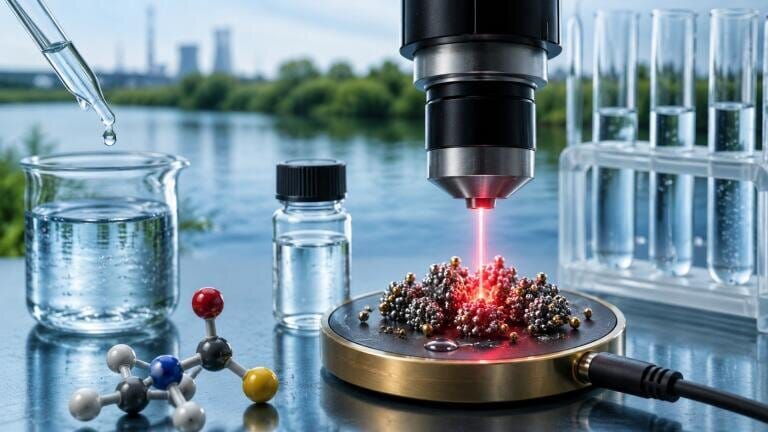
A team led by Dr. Tao Zhou of the College of Materials Science and Engineering, Qingdao University of Science and Technology, Qingdao, China, has now reported a novel SERS-based method to detect Pb2+, the positively charged form of lead found in water, that is claimed to be more sensitive than any comparable approach published to date. The research describes the use of bismuth nanoparticles functionalised with L-cysteine, a naturally occurring amino acid, as detection probes.
The mechanism relies on the amino acid's chemical structure. L-cysteine binds to Pb2+ through its carboxyl and amine groups, causing the bismuth nanoparticles to aggregate. This aggregation generates so-called Raman hotspots, regions of intensified electromagnetic field that amplify the signal produced by 4-aminothiophenol, a reporter molecule used to make the presence of lead detectable.
The researchers have further enhanced the response by depositing the bismuth onto an electrode substrate using electrodeposition, a process in which a thin metallic film is formed on a surface by passing an electric current through a solution containing dissolved metal ions.
Together, these elements have allowed the method to reach a detection limit as low as 0.005 nanomoles per litre, equivalent to 1.04 × 10⁻³ micrograms per litre. This represents a sensitivity between two and five orders of magnitude greater than that of conventional lead ion detection techniques, according to the study.
The authors have described the method as environmentally friendly, simple to perform and low in cost, while also noting its stability and ultra-low detection limit. They have suggested that the approach holds considerable promise for practical use in monitoring lead ions in real-world settings, offering what they characterise as a novel route to detecting heavy metal contamination that could complement existing analytical chemistry practice.
For further reading please visit: 10.1007/s11706-026-0766-z
ILM 51.6 Sept 2026



 Product directory


.jpg)
.jpg)