Laboratory products
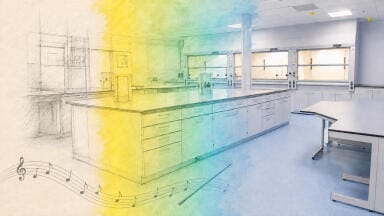
A successful laboratory isn’t defined by how many benches fit into a room. It’s defined by how effectively the space supports the application, the equipment and the people using it.
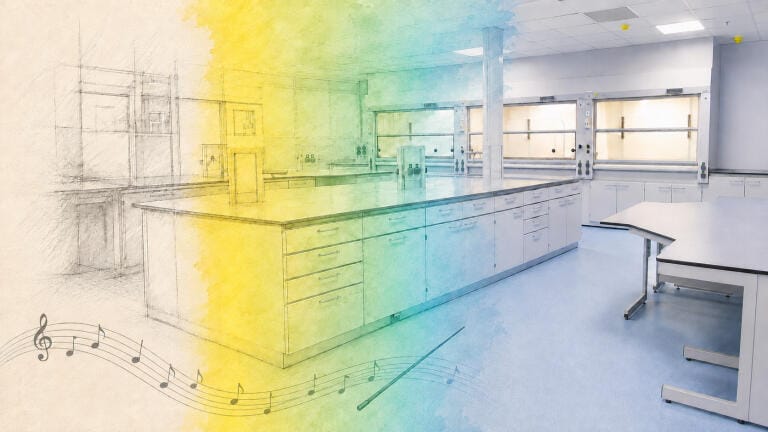
Laboratory projects often begin with a floorplan. Benches are arranged, fume cupboards positioned and services distributed around the room. While this produces a layout, it doesn’t necessarily lead to an efficient laboratory or demonstrate how effectively it will perform once it becomes operational. An application-led approach brings that working reality into every stage of the laboratory project, from the earliest discussions through to installation and commissioning.
Understanding the application is fundamental. Whether the facility is supporting analytical chemistry, pharmaceutical development, materials testing or production, every process has different requirements for containment, utilities, equipment, storage and workflow. These requirements should drive the space, rather than being accommodated once the room layout has already been established.
Every laboratory has a workflow, whether it’s formally documented or not.
Samples move through preparation, analysis, storage and disposal while operators interact with multiple workstations throughout the day. Some activities must remain separated, while others need to sit close together to prevent repeated handling or unnecessary journeys across the laboratory. Poorly planned layouts introduce unnecessary movement, congestion and inefficient use of specialist equipment.
Mapping this workflow at the design stage allows equipment, storage and services to be positioned where they add value, reducing handling, improving productivity and making future expansion considerably easier.
The same principle applies to containment. It should never be selected simply because space has been allocated for a fume cupboard.
Risk assessment, chemical usage, throughput and future flexibility all influence the most appropriate solution. In some laboratories, traditional ducted fume cupboards remain the correct choice. In others, recirculating fume cupboards can provide additional containment capacity without increasing building extract requirements, offering greater flexibility as laboratory requirements evolve.
The objective is to specify the most appropriate containment solution for the application, rather than forcing the application to fit the available infrastructure. Heavy-duty, motorised height-adjustable worktops with recirculating containment units, and walk-in, bunded, ducted fume cupboards with combination sashes for ease of operation, are two examples of what can set application-led laboratory design apart. Each responds to an operational requirement rather than simply occupying a predetermined position within the room.
An application-led approach must also look beyond the laboratory’s immediate requirements.
Research priorities change, equipment is upgraded, teams expand and processes develop. Designing a laboratory entirely around today’s requirements often creates unnecessary cost and restrictions during future modifications, particularly where fixed furniture and services prevent equipment from being repositioned or replaced.
Incorporating modular furniture, mobile workstations, adaptable storage and spare service capacity allows laboratories to evolve without major refurbishment.
Future-proofing doesn’t mean over-designing a facility; it means identifying where flexibility will provide long-term value.
Laboratory design is ultimately an engineering exercise.
Furniture, containment, ventilation, electrical services, specialist gases, water systems, structural constraints and maintenance access all interact.
A change to the position or specification of one item can alter service routes, extract requirements, or the clearances needed by another. Decisions made in one discipline affect every other, making early coordination essential
Successful projects require these systems to be considered together through a holistic approach, rather than as individual packages procured independently.
They must also be installed and commissioned as a coordinated laboratory, ensuring that the completed space performs as the design intended.
Ultimately, a laboratory should function efficiently from the day it becomes operational, while retaining the flexibility to support future developments.
By understanding the scientific application first, then integrating containment, furniture, services and infrastructure into a coordinated design, laboratories can be delivered that are safer, more efficient and significantly easier to adapt as operational requirements change.
At GPE Scientific, this design-led approach underpins every laboratory project, ensuring that the completed facility supports both current requirements and future growth.
ILM 51.6 Sept 2026



 Product directory













.jpg)
.jpg)

.jpg)