Laboratory products
One toke over the line sweet Jesus, One toke over the line,” were the lyrics penned by American/United States (US) Folk Rock duo, Mike Brewer, and Tom Shipley after they had already enjoyed a healthy dose of cannabis. But at the time, 1970, cannabis was not in the mainstream and was considered to be contributing to the state of chaos within the United States and the world. Ironically, the famous big band director, Lawrence Welk, the conservative son of German immigrants famous for his elegant “Champagne Music,” believed the song to be a modern spiritual. The song was broadcast into millions of living rooms of families across the United States in 1971. More attentive censors banned this song as well as hundreds of other songs of the era.
Fifty years later, cannabis has gained both legal and social acceptance across continents. Estimates for prevalence in Canada where cannabis is legal are 26%. Rate is 23% in the United States where over half the country has legal adult use cannabis. Mexico with cannabis still illegal, has a reported rate of 2%. Spain had the highest rate of average consumption reported for Europe with 12.6% of the adult population using cannabis in 2024. France was not much less with 10.8 of the adults using cannabis. Italy was reported to have 10.6% of the adult population having used cannabis that year. The history of use in Spain supports the rumour that Paul and Linda McCartney’s song “Hi, Hi, Hi” of 1972 was written in Spain and subsequently banned in the United Kingdom.
Modern day Germany has moved forward with the legal status of adult use cannabis. But this creates even greater urgency to develop solutions to cannabis impaired driving. The German Road Traffic Act has established a maximum tetrahydrocannabinol (THC), the psychoactive ingredient in cannabis, to a limit of 3.5 nanograms per millilitre ng/ml for cannabis consumers. The concern is justified given the rise in fatal crashes attributed to cannabis alone. Alcohol functional impairment is linearly related to biologic measures in the matrices of blood, breath, salvia or eye tears [1]. This is not the case for measures of cannabis making the need for objective functional tools critical [3].
Blood and saliva (to date breath has not been shown to measure edible use) can measure what drugs, biologics cannot determine impairment. IMMAD-Impairment Measurement Marijuana and Driving can determine impairments of functions critical for safe driving. The retinal biomarker using IMMAD has already been shown to objectively document acute impairment in visual processing and the retinal biomarker under study identifies impairment of functions critical for safe performance [2] particularly driving [3]. Multiple studies found that the risk of being involved in a crash significantly increases after marijuana consumption [4]. A study of 811 marijuana users in the US identified that 6.9% actually use marijuana while driving, another 5.7% drive within thirty minutes of having used marijuana and an additional 13.4% drive within one hour of having used marijuana [5]. There is no Standard Field Sobriety Test measure of functional impairment to drive with marijuana use. IMMAD is an objective measure of visual performance that is critical for safe driving. The functional impairments documented by IMMAD, loss of detection of targets in peripheral vision, are already considered related to the ability to safely drive. Thirty-four states in the US already have laws related to driving and the peripheral vision dysfunctions that IMMAD measures [6]. Canada requires intact vision in the superior visual field of at least 15 degrees as well as extensive side vision in all provinces [7]. The European Side Peripheral Vision Requirements in European Union has established side vision of 70 degrees on each side and thirty degrees superior.
Marijuana and impairment is a concern in the workplace. The US Colorado Department of Public Health and Environment looked at data from the state’s Behavioral Risk Factor Surveillance System regarding current marijuana use (at least 1 day during the preceding 30 days) among 10,169 participants who reported using marijuana. The data show that between 2014 and 2015, 14.6% reported current marijuana use, with the highest use among workers in the accommodation and food services industry (30.1%) and food preparation and serving (32.2%) occupations [8]. US cross-sectional data from a sample of full-time employed adults eighteen or older from the 2021 to 2022 National Survey on Drug Use and Health (N=46,499) found an association between cannabis use recency, past-month cannabis use frequency, CUD severity, and workplace absenteeism. Increasing use was associated with increased incidence of both missing work due to illness/injury and skipping work. State adoption of recreational marijuana use was associated with a 12.9% increase in workplace injuries in a study of younger workers ages 20 to 34 in a study utilising the Bureau of Labor Statistics Survey of Occupational Injuries and Illnesses [9].
A recent study undertaken in Spain, investigating marijuana, vision and driving found significant reductions in visual functions with an enrolment of twenty participants. They found that with marijuana use contrast sensitivity was reduced in the low spatial frequency range. The reductions were correlated with significant lane deviations in a simulated driving task (p < 0.05) [10]. The contrast reductions related to low spatial frequency were corelated dysfunction in driving, specifically with deviations out of lane onto the shoulder of the road. A recent meta-analysis specific to cannabinoids and retina looked at 495 studies, screened 229 studies, assessed 52 studies for eligibility, and utilised 16 studies for qualitative analysis. The conclusion was that cannabinoids may have a significant role in retinal processing and function [14]. IMMAD measures retinal function with recent cannabis use.
The striped target used in the IMMAD technology is a target that displays lower spatial frequencies and identifies dysfunction in the magnocellular visual pathway [11]. This pathway, the magnocellular response was impaired when measured by ERG P100 in abstinent, but regular cannabis users [12].
Reductions in low spatial contrast frequency vision are related to the ability to perceive facial expression, and this contributes to poorer social engagement [13]. The dysfunction in low spatial contrast frequency vision, poorer recognition of facial emotion is better understood in Parkinson’s disease and is attributed to dopamine depletion processes in the retina [[14].
Standards for vision dysfunction and impairment of peripheral vision have been historically accepted in courtrooms and there is also a large body of scientific literature to support that tunnelling of vision and constricted visual fields are a significant impairment to drive regardless of the cause [6].
IMMAD measures functions that are already clearly associated with the driving tasks. No other technologies under development have measures of functions already demonstrated to be related to the driving task. If an impairment in superior visual field were identified while applying for a driver’s license in Canada, the driver’s license would be denied.
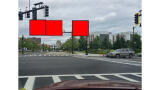
There are already definitions of how impaired peripheral vision can be reduced and be considered legally blind despite having 20/20 vision in the United States, Canada, and Europe. Reductions in superior visual field interferes with viewing of traffic signals. The Denver Post reported that the rate of running red lights went up eighteen percent in the city of Denver when legal adult use marijuana sales began.
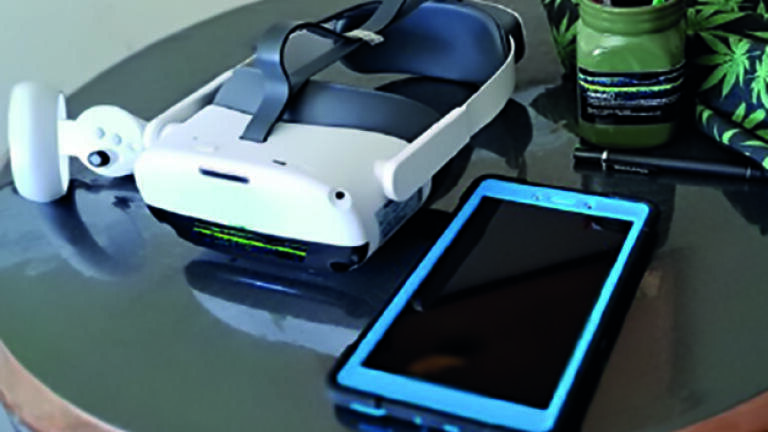
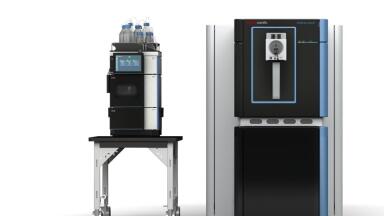
IMMAD Impairment measurement marijuana and driving patented for the utility of detecting cannabis use.
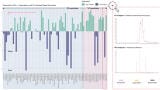
Sample Readout: Right eye to the left, Left eye to the right. One single spot in a square is within normal ranges. Anything else is a deviation from normal. The denser the dots, the greater the dysfunction.
Technology that provides more efficient testimony in the courtroom and results in convictions will remove deadly drivers from the roads. There are deadly drivers using cannabis on roads across the world. The state of Washington in the United States found that those drivers involved in fatal crashes testing positive for the active marijuana component, tetrahydrocannabinol (THC), and no other drugs or alcohol, were six times more likely to have killed someone other than themselves compared to a driver positive for alcohol alone [15].
It is probable that these drivers did not see the pedestrian, bicyclist, or other car or see them accurately. IMMAD objectively measures the visual dysfunction that occurs with cannabis use.
As for music, it does not matter if your down the road music is Welk’s Champagne Bubble Music, Steppenwolf Born To Be Wild or Prince Little Red Corvette; there is no driving with drinking or drugging music that is safe.
1. Mello A, V.D., Botch-Jones S,, Detection of Delta9 Tetrahydrocannabinol and Metabolites in Meibomian Lipids of Tear Samples Through LC-MS/MS, in International Cannabis Research Society. 2021: Virtual and Israel.
2. Valenti DA and Halsor C, Acute Cannabis Use: Retinal Function. Invest Ophthal Vis Sci 2018. 59 (5292).
3. Wood, J.M., Vision Impairment and On-Road Driving. Annu Rev Vis Sci, 2022. 8: p. 195-216.
4. Elvik, R., Risk of road accident associated with the use of drugs: a systematic review and meta-analysis of evidence from epidemiological studies. Accid Anal Prev, 2013. 60: p. 254-67.
5. Zebra. Study: Marijuana Use and Driving. 2017 [cited 2022 8 29 2022]; Insurance Research].
6. Blindness, P. State Vision Screening and Standards for License to Drive. 2020 [cited 2022 8 9 2022].
7. Canada. Medical Review Standards. http://www.mto.gov.on.ca/english/dandv/driver/medical-review/standards.shtml [cited 2022 8 29 2022].
8. Smith, R., et al., Current Marijuana Use by Industry and Occupation - Colorado, 2014-2015. MMWR Morb Mortal Wkly Rep, 2018. 67(14): p. 409-413.
9. Li, L., et al., Recreational Marijuana Legalization and Workplace Injuries Among Younger Workers. JAMA Health Forum, 2024. 5(2): p. e235438.
10. Ortiz-Peregrina, S., et al., Comparison of the effects of alcohol and cannabis on visual function and driving performance. Does the visual impairment affect driving? Drug Alcohol Depend, 2022. 237: p. 109538.
11. Bognár, A., et al., Transcranial Stimulation of the Orbitofrontal Cortex Affects Decisions about Magnocellular Optimized Stimuli. Front Neurosci, 2017. 11: p. 234.
12. Remy, I., et al., Impaired P100 among regular cannabis users in response to magnocellular biased visual stimuli. Prog Neuropsychopharmacol Biol Psychiatry, 2022. 113: p. 110437.
13. Peters, J.C. and C. Kemner, Facial expressions perceived by the adolescent brain: Towards the proficient use of low spatial frequency information. Biol Psychol, 2017. 129: p. 1-7.
14. Hipp, G., et al., Primary vision and facial emotion recognition in early Parkinson’s disease. J Neurol Sci, 2014. 338(1-2): p. 178-82.
15. Grondel D, Driver Toxicology Testing and the Involvement of
Marijuana in Fatal Crashes, 2010-2014, W.T.S. Commission, Editor. 2016: http://wtsc.wa.gov/wp-content/uploads/dlm_uploads/2015/10/Driver-Toxicology-Testing-and-the-Involvement-of-Marijuana-in-Fatal-Crashes_REVFeb2016.pdf.
ILM 51.6 Sept 2026



 Product directory












.jpg)
.jpg)

.jpg)


.jpg)
