Chromatography
Published over 14 years ago. See the latest and most current information on Chromatography.
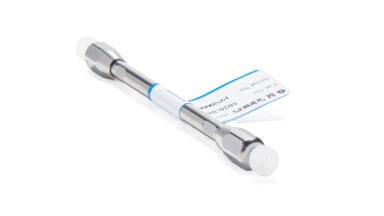
Waters Corporation have announced that Vicam®, a Waters® Business, introduced the DON-NIV™ WB Immunoaffinity (IA) column, the only IA column on the market to simultaneously screen for deoxynivalenol (DON) and nivalenol (NIV). Coupled with liquid chromatography analysis, the DON-NIV WB column provides over 90% recovery of both DON and NIV and doubles the productivity of commercial, government, and food safety research laboratories.
"The new DON-NIV WB column provides rapid and simple sample preparation using the superior strength of monoclonal antibody technology. DON and NIV are analysed simultaneously in the same sample, facilitating efficient research and more effective risk management for industry," said Dr. Stephen Powers, Head of Research & Development for Vicam.
"DON was the first trichothecene mycotoxin to be regulated by many countries. Increased interest in related toxins such as NIV drives the need for improved technologies," comments Marjorie Radlo, General Manager, Director of Operations, for VICAM.
DON and NIV are trichothecene mycotoxins produced by fusarium molds. Animal feeds which are contaminated with fusarium toxins cause feed refusal, weight loss, vomiting and diarrhea – resulting in significant health, production, and economic risks. NIV has also been linked to lung and brain hemorrhage and bone marrow injury through disruption of DNA and protein synthesis.
The DON-NIV WB column meets all of the stringent European Union regulations for the recovery of DON in food and feeds which specify 0.2 ppm for infant foods, 0.5 ppm for breads, pastries, biscuits and cereals, and 1.75 ppm for wheat, oats, and maize. The US Food and Drug Administration advise no more than 1 ppm DON in wheat products intended for human consumption and specific levels for feeding of livestock animals. While there are currently no officially set detection limits for NIV, growing research on the co-occurrence of toxins and the potential for amplified toxicity is driving the need for increased awareness and potential regulation.
ILM 51.6 Sept 2026

 Product directory