Columns
Published over 11 years ago. See the latest and most current information on Columns.
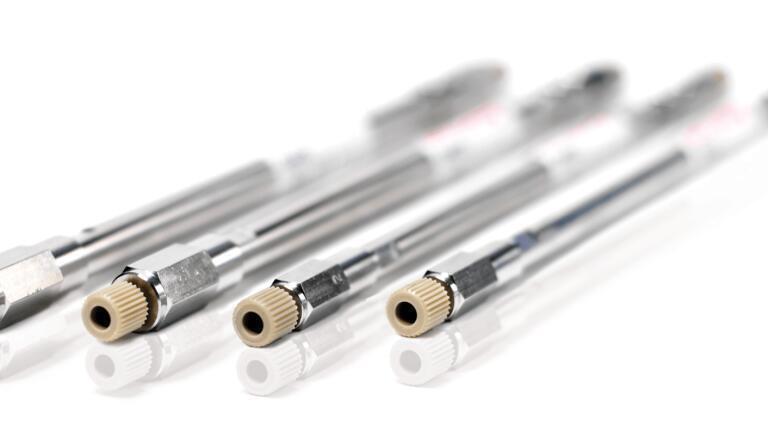
TSKgel Amide-80, renowned for analysing protein glycosylation, is now available in 2 µm particles, ideally suited for high resolution UHPLC.
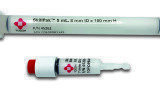
TSKgel Amide-80 columns packed with 2 µm silica based particles are the latest additions to the well-known TSKgel Amide-80 series from Tosoh Bioscience. The amide stationary phase provides a unique selectivity under regular normal phase conditions or in the hydrophilic interaction (HILIC) mode of chromatography. The Amide-80 phase shows higher retention of polar compounds than other Amide columns on the market.
For years, TSKgel Amide-80 columns have been used successfully for HILIC separations of polar compounds such as saccharides, glycans, oligosaccharides or peptides, documented in more than 250 scientific publications. In parallel to the growth of the biotherapeutics market the use of Amide-phases for glycosylation analysis steadily increased.
Packed with spherical silica particles that are covalently bonded with non-ionic carbamoyl groups, TSKgel Amide-80 provides higher stability than conventional amino-phases and a unique selectivity. The characterisation of the new 2 µm version of TSKgel Amide-80 compared to the renowned 3 µm Amide-80 based on the system proposed by Y. Kawachi et al. (J. Chromatogr. A, 1218 (2011) 5903 ff) proves the similarity in selectivity.
ILM 51.6 Sept 2026





 Product directory