Laboratory products
Published over 16 years ago. See the latest and most current information on Laboratory products.
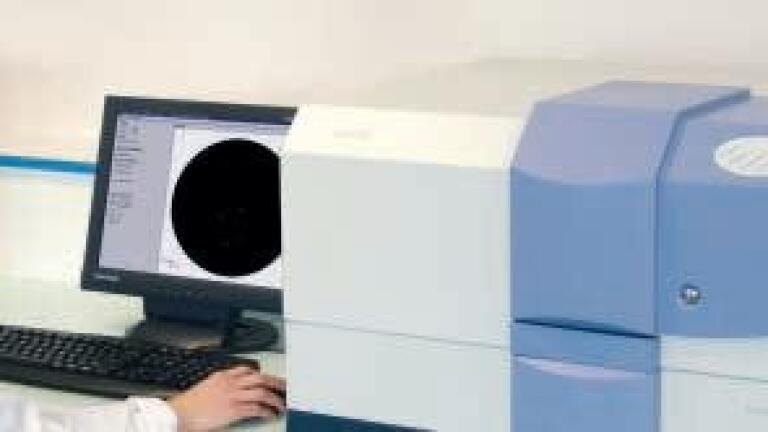
GlaxoSmithKline Parma (Italy) manufacturing site has received inspection and formal approval from the FDA to use the ChemScan RDI scanning cytometer from AES CHEMUNEX, as a part of the rapid microbiological inprocess monitoring of a non-sterile nasal spray product. Rapid monitoring of the manufacturing process using more sensitive tests allows accurate prediction of product quality; thus eliminating the need of final product testing to release the prescription product to the market.
The recent work with the ChemScan RDI has delivered confidence in the speed and high sensitivity of the system to deliver accurate and early counts for the control of surfaces and product bulk solutions.
In addition to pharmaceutical waters testing, the sensitivity of the ChemScan RDI is used to deliver ‘real time’ microbiological process controls for product bulk monitoring using bioburden application and surface monitoring using ChemSwab application.
The ChemScan RDI laser scanning cytometer delivers counts of viable microorganisms within 3 hours after sampling, with sensitivity down to a single cell; without the requirement for a growth phase while the standard
growth plate method typically takes 48 to 72 hours (TSA) or 5 to 14 days (R2A) to deliver counts of culturable organisms. Such growth-based methods do not allow early confirmation that the water system, the product bulks, and the surfaces in controlled production area are within approved microbiological limits, any response being retrospective to the production process.
ChemScan RDI tests for rapid environmental monitoring and in-process measurements as part of a continuous quality assurance programme enable constant monitoring, evaluation and adjustment of the process
reducing the expensive risk of contaminated product.
Furthermore, the technology being non-destructive, GSK demonstrated, during FDA audit, that the ChemScan RDI protocol enables micro-organism recovery on traditional culture media for identification purpose.
More information on www.aeschemunex.com
ILM 51.6 Sept 2026



 Product directory