-(1).jpg)
.jpg)
Laboratory products
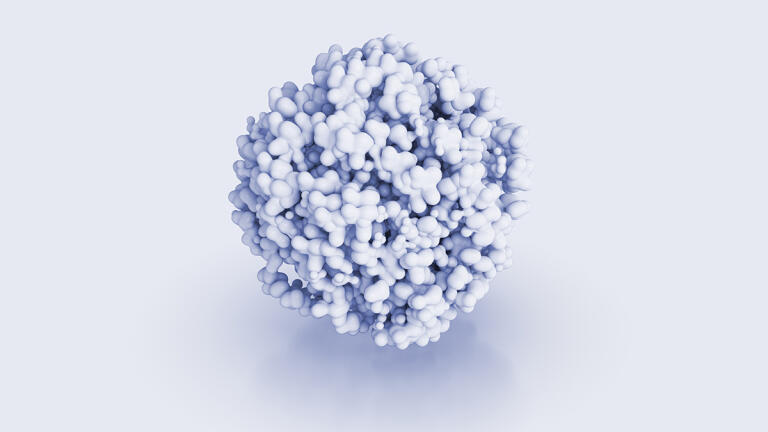
Proteomics has revolutionised our ability to identify and quantify proteins in complex biological systems. However, knowing which proteins are present is only part of the picture—understanding how they behave in solution, how they fold, interact, and respond to environmental changes, is essential for uncovering their biological function.
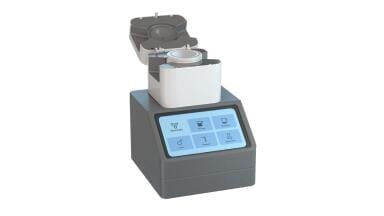
Anton Paar’s SAXSpoint system complements proteomics by providing structural information under near-native conditions. Using small-angle X-ray scattering (SAXS), proteins can be analysed directly in solution without the need for crystallisation. The technique delivers insights into protein size, shape, and aggregation state, and enables the study of conformational changes, for example induced by ligand binding or variations in buffer conditions.
Within proteomics workflows, SAXSpoint supports both quality control and deeper structural analysis. It helps ensure that samples are homogeneous and free from aggregation before further experiments, improving the reliability of downstream results. In addition, SAXS allows the investigation of protein–protein interactions by confirming complex formation and determining oligomeric states in solution, complementing data obtained from mass spectrometry.
SAXSpoint is particularly suited for studying flexible and intrinsically disordered proteins, which are often challenging for high-resolution methods. By capturing conformational ensembles and structural transitions, SAXS provides valuable insights into protein dynamics that are directly linked to function.
As part of an integrative approach, SAXSpoint bridges the gap between protein identification and functional understanding. Combined with proteomics and computational modelling, it enables a more complete view of biomolecular systems in their native environment – supporting advances in biopharmaceutical development, structural biology, and life sciences research.
ILM 51.6 Sept 2026



 Product directory






















.jpg)
.jpg)
.jpg)


.jpg)
