Laboratory products
Published over 15 years ago. See the latest and most current information on Laboratory products.
According to a study of 632 critically ill patients published by the American Journal of Respiratory and Critical Care Medicine, when used in the intensive care unit (ICU), a novel point-of-care blood biomarker test for Neutrophil Gelatinase-Associated Lipocalin (NGAL) can help identify patients at risk of severe acute kidney injury (AKI) within the first week of admission. To date this study represents one of the largest prospective NGAL biomarker studies in an ICU setting. AKI occurs in up to 25% of patients admitted to the ICU and therefore early identification is critical to preventing unnecessary complications, increased hospitalization, associated costs, onset of critical illness and an increased risk of death. However, identification can often occur too late.
Patients with AKI may suffer temporary or permanent loss of renal function which would need to be supported via dialysis on a short or long-term basis. Without early identification of AKI a substantial portion of kidney function may be lost prior to recognition.
“In critically ill patients AKI is a clear independent risk factor for increased mortality and accurate and early diagnosis of patients at high risk for development of AKI is of critical importance. This study shows that NGAL has a significant additional value combined with standard tests and sets the stage for further research for prediction of severe AKI,” said Dr Hilde De Geus of the Erasmus University Medical Center Rotterdam in the Netherlands where the study was conducted.
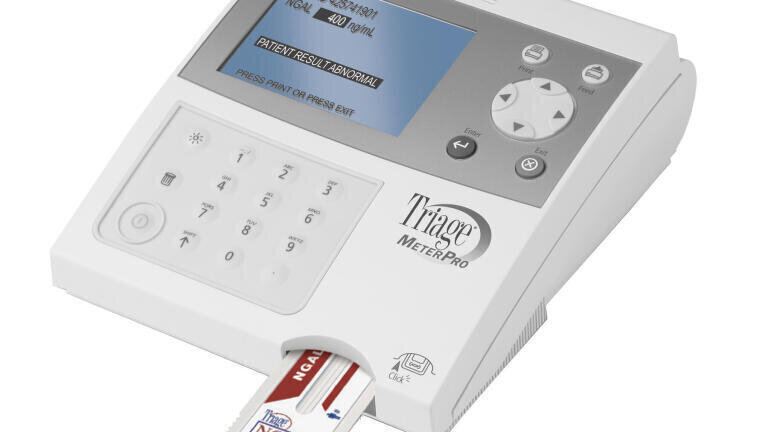
The device used in the study, the Alere Triage® NGAL test, is a point-of-care fluorescence immunoassay to be used with the Alere Triage® Meter Pro for the rapid, quantitative determination of NGAL in EDTA anti-coagulated whole blood or plasma specimens. The product bears the CE Mark, which expresses conformity with the requirements of the European IVD Directive and allows distribution within the European Union. The tests are now available for commercial sale in Europe and will soon be available in many other countries around the world.
ILM 51.6 Sept 2026




 Product directory