Laboratory products
Published over 17 years ago. See the latest and most current information on Laboratory products.
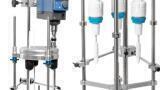
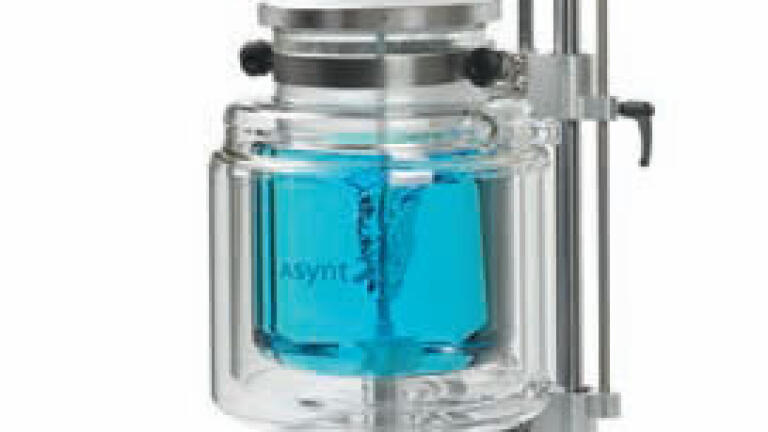
Asynt’s new ReactoMate Super laboratory reactor system offers an elegant, safe and convenient way of handling larger-scale laboratory reactions. Asynt MD Martyn Fordham, said: “ReactoMate Super combines all the technical features of the successful ReactoMate CLR (Controlled Lab Reactor) system with a new and very stylish support system for handling larger glass vessels and reaction volumes up to 30 litres. It will appeal particularly to process development chemists working in the area between research synthesis and pilot plant scale.” The ReactoMate Super support system offers clear open access to the reactor whilst remaining completely stable even with the heaviest of vessels. It also takes all the effort out of manipulating large reaction vessels. A built-in jacking system raises and lowers the vessel and all attached ancillaries easily and safely as required for ease of access: this is especially useful when needing to charge or empty the vessel at a safe working height during operation. Interchangeable support rings and quick-release clamps allow easy exchange of reaction vessels from 1 litre to 30 litres, and the compact dimensions permit installation in many standard fume cupboards.
ReactoMate systems display all the desirable key features of a laboratory reactor – features and options include precise control of reaction variables, a powerful direct drive stirrer, excellent visibility and the ability to operate under vacuum or inert atmospheres. Comprehensive data logging and control systems are also available to customer requirements. Asynt’s new PTFE reaction vessel lids, with several advantages over glass, are also available for ReactoMate. Screw-in PTFE taper joints allow chemists to still use their standard jointed glassware but with the additional benefit of the ability to interchange the sizes used. PTFE lids are made with a lower profile than glass, which combined with a built-in stirrer guide significantly reduces the height of the reaction station, giving better accessibility and safety. PTFE also has better thermal insulation properties than glass, reducing condensation and making processes like distillation more efficient.
ILM 51.6 Sept 2026




 Product directory