Laboratory products
Published over 16 years ago. See the latest and most current information on Laboratory products.
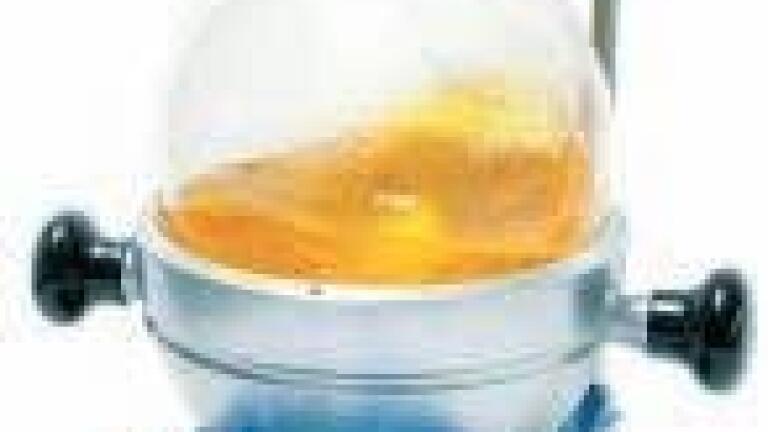
DrySyn MAXI and SuperMAXI heating blocks from Asynt provide safe, accurate temperature control for synthesis, distillation and reflux operations when larger volumes (two, three or five litres) are in use.
The safety implications of using an oil bath to heat larger volumes of solvent are fairly obvious, but the frequently used alternative of a heating mantle has its own problems. The heating elements in these devices often reach temperatures well above the flash point of most common solvents, and a fire involving several litres of solvent would be a serious matter.
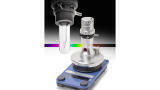
Used with a conventional laboratory hotplate stirrer, DrySyn MAXI and SuperMAXI give rapid, safe and controllable heating up to 250ºC with excellent reaction visibility and powerful stirring. The DrySyn MAXI block accommodates any standard 3000ml round-bottom flask, and an insert is provided to adapt the block for 2000ml flasks. The DrySyn SuperMAXI takes a 5000ml flask as standard. Heat-resistant handles on the heating block make for greater safety and convenience when moving these large flasks around the laboratory. Provision is made for a temperature probe should temperature feedback control or monitoring be required.
According to Martyn Fordham, Asynt’s Managing Director, over 25,000 DrySyn laboratory heating and cooling blocks have been supplied world wide since the product was introduced in 2004.
ILM 51.6 Sept 2026



 Product directory