Laboratory products
Published over 12 years ago. See the latest and most current information on Laboratory products.
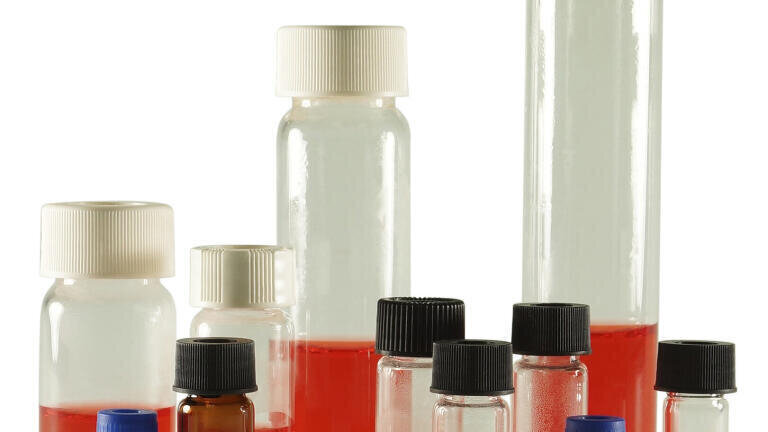
The patented manufacturing process and design of MicroSolv’s 'Centre Draining Maximum Recovery' (CDMR) vials and bottles results in an internal glass surface that is virtually seamless. This eliminates the 'internal ridge' that may occur in some vial designs when the vial blank is fused to the vial bottom. This 'internal ridge' can retain up to 17ul of fluid sample in a 1.8ml vial. MicroSolv’s patented design allows liquid samples to flow freely and completely to the bottom of the glass vial or bottle into a conical or concave reservoir. This is especially useful if maximum recovery of a sample is required.
MicroSolv’s CDMR vials and bottles are made with TYPE 1, formula 33 first hydrolytic laboratory grade borosilicate glass and all specifications, including the internal bottom heights, are tightly controlled so as to prevent damage to needles. MicroSolv’s CDMR vials offer unrivalled consistency and performance.
MicroSolv’s CDMR vials and bottles are available in a wide range of dimensions and fill volumes and can be purchased as 'Easy Purchase Packs' (vial and cap kits) or vials only. For further information on MicroSolv CDMR vials, email Hichrom Limited, Tel: 0118 930 3660 or visit the MicroSolv website.
ILM 51.6 Sept 2026




 Product directory




















.jpg)