Laboratory products
Published over 8 years ago. See the latest and most current information on Laboratory products.
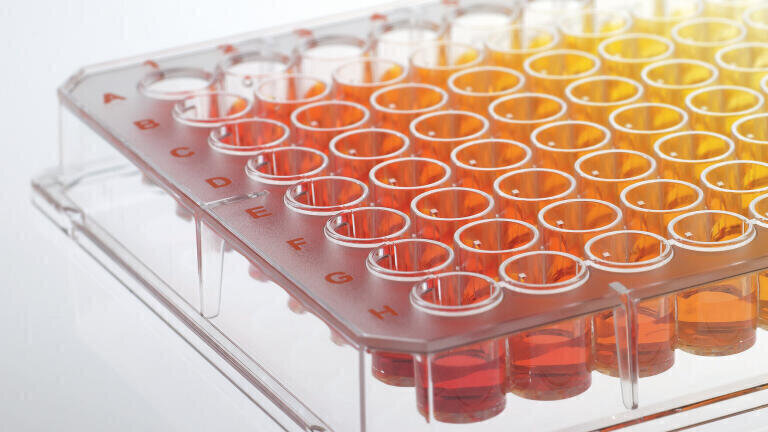
For each experiment HepG2 cells were seeded at a density of 6000 cells/cm2 in wells of transparent 96-well F-bottom BRANDplates® and cultivated in DMEM medium containing 7% FCS at 37°C, 95% relative humidity and 5% CO2.
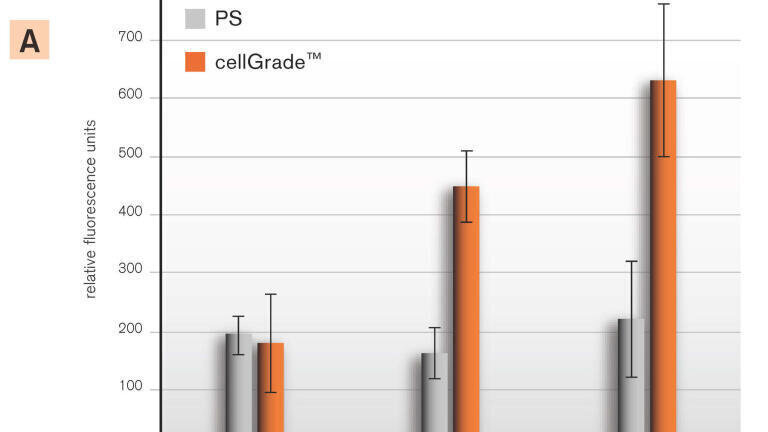
See Figure A
Metabolic activity measured by resazurin-resafurin turn over is used for relative quantification of cell numbers after 2 and 3 days post seeding. HepG2 cells were incubated in presence of 50 μM resazurin for 3 hours prior to fluorescence measurement (Ex 506 nm/Em 635 nm) in a plate reader (GeminiEM Molecular Devices). HepG2 cells cultivated on BRANDplates® cellGrade™ plus show higher fluorescence signals indicating higher cell numbers after 2 and 3 days in vitro (DIV) when compared to non-treated microplates (PS). Resafurin fluorescence measured in cell-free wells was used for background correction. Data represent mean and standard deviation of 8 measurements.
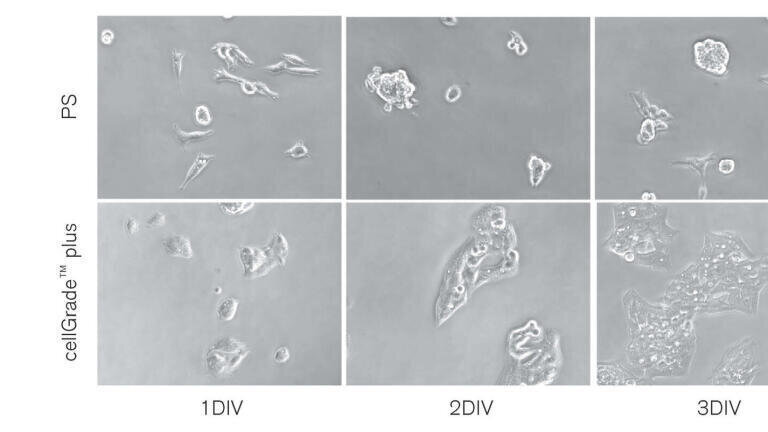
See Figure B
Representative images of HepG2 cells cultivated on non treated (PS) and cellGrade™ plus treated microplates at corresponding time points (200 x magnification).
Conclusion
BRANDplates® with cellGrade™ plus surface perfectly support attachment and proliferation of HepG2 cells.
Please click here for our BRANDplates® Selection Guide and further application notes.
ILM 51.6 Sept 2026



 Product directory


.jpg)
.jpg)










.jpg)
.jpg)
.jpg)
.jpg)